
USA: The Southwest, From Denver to Los Angeles.
Colorado · Utah · Arizona · California
We set off on our first road trip, for a little over two weeks in the American Southwest. Our goal is to discover as many national parks as possible along the way, stopping to hike and camp in them whenever possible. The United States was an obvious choice of destination: we love mountains and wide open spaces, and the idea of traveling there had been on our minds for a while!
We land in Denver, Colorado. After picking up our 4x4 and packing our bags, we head toward the Rockies and our first national park: Rocky Mountain National Park.
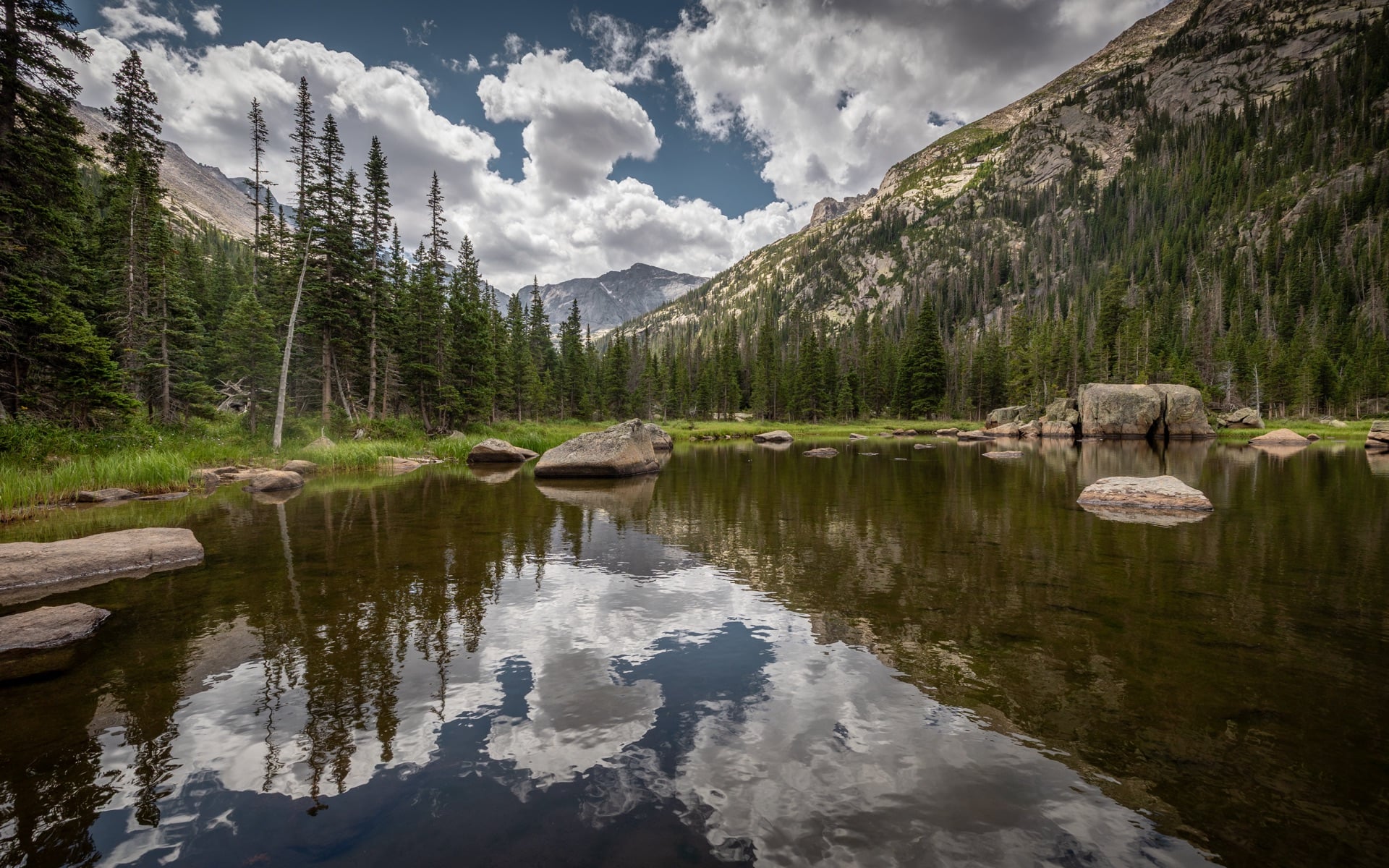
Rocky Mountain National Park
Rocky Mountain National Park is located about an hour and a half from Denver, making it a fairly logical first stop after our arrival in Colorado. It is a very popular park, but also one that truly represents the American Rockies, with vast pine forests stretching as far as the eye can see, alpine lakes, high peaks and roads that already take you very high by car.
Trail Ridge Road is one of the park's best-known roads and reaches an elevation of more than 3,700 meters. For us, Rocky Mountain really marks our arrival in America's mountain landscapes. It is the first national park of this road trip and also our first experience of hiking and backcountry camping in a national park in the United States.
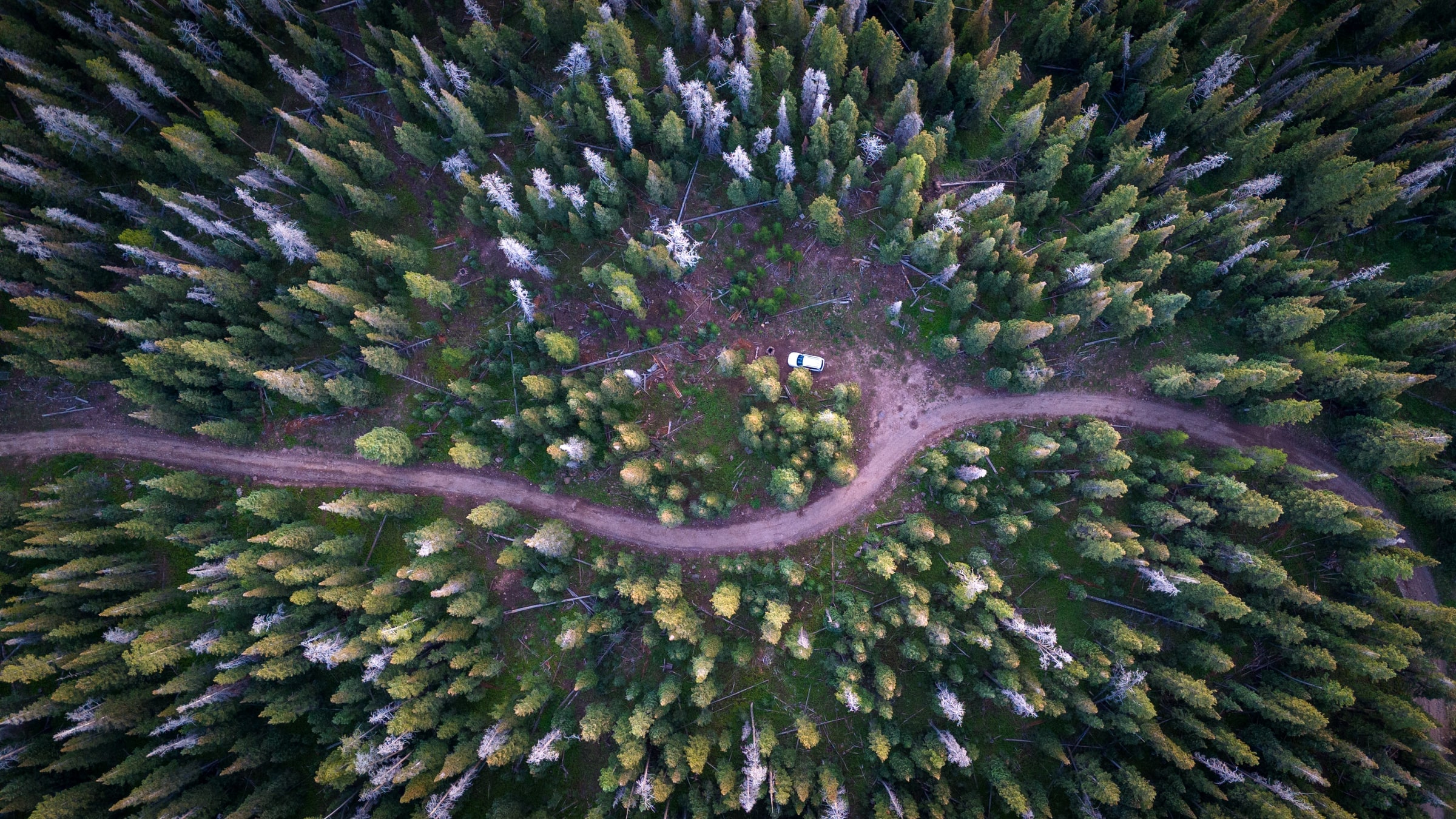
We Leave Denver and Arrive at the Park Entrance
We are right in the middle of August and it is already hot, but fortunately the park is at altitude, and these few days between 2,000 and 3,500 meters will do us good!
Our goal is to explore part of the park on a multi-day hike, as we are used to doing back home. I do mean "part", because before going there, you do not realize just how vast American parks are, sometimes the size of an entire region in France, and that often only a tiny part of them can be covered on hiking trails... The rest is pure wilderness, with almost no trace of human presence.
Backcountry Camping in American National Parks Is Complicated!
As regular wild campers in the Alps, this first park makes us realize just how complicated multi-day hiking in American national parks can be! Here, there is no backcountry camping without a permit... and permits are not easy to get. The best campsites are booked through an online platform months in advance, and often only the less popular ones remain, which have to be reserved in person at the ranger station on the day itself. So there is not much room for improvisation or spontaneity... It takes away a little of the charm, but we follow the rules, which are ultimately a good thing for nature.
Off We Go for Three Days of Hiking!
We manage to reserve two campsites for a three-day loop. Our starting point will be Bear Lake, a very busy site in the park. Thanks to our backcountry permit, we do not need a "Timed Entry", in other words a reservation to access the road leading to the trailhead parking lot, which is fortunate for us.
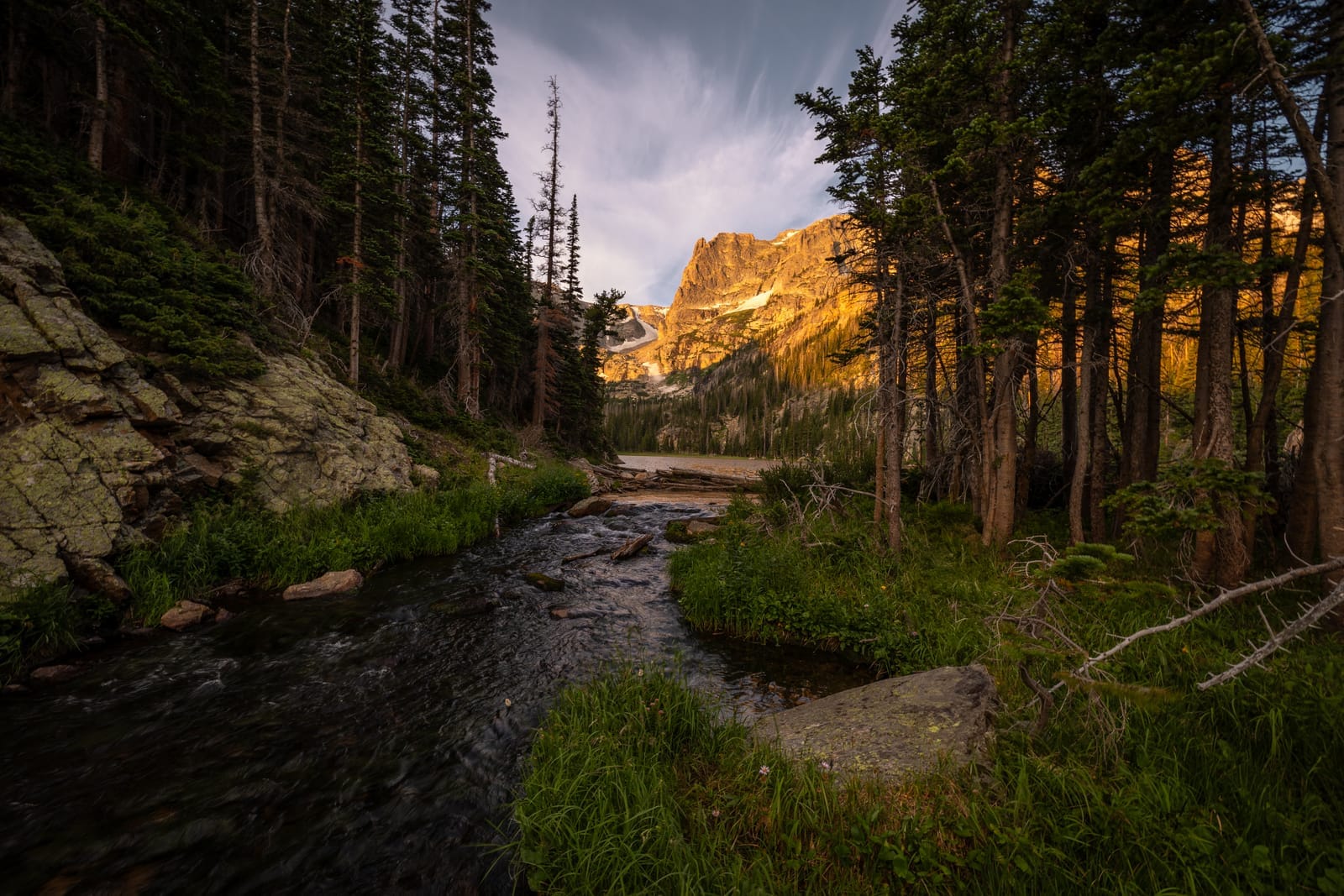
Arriving at the lake
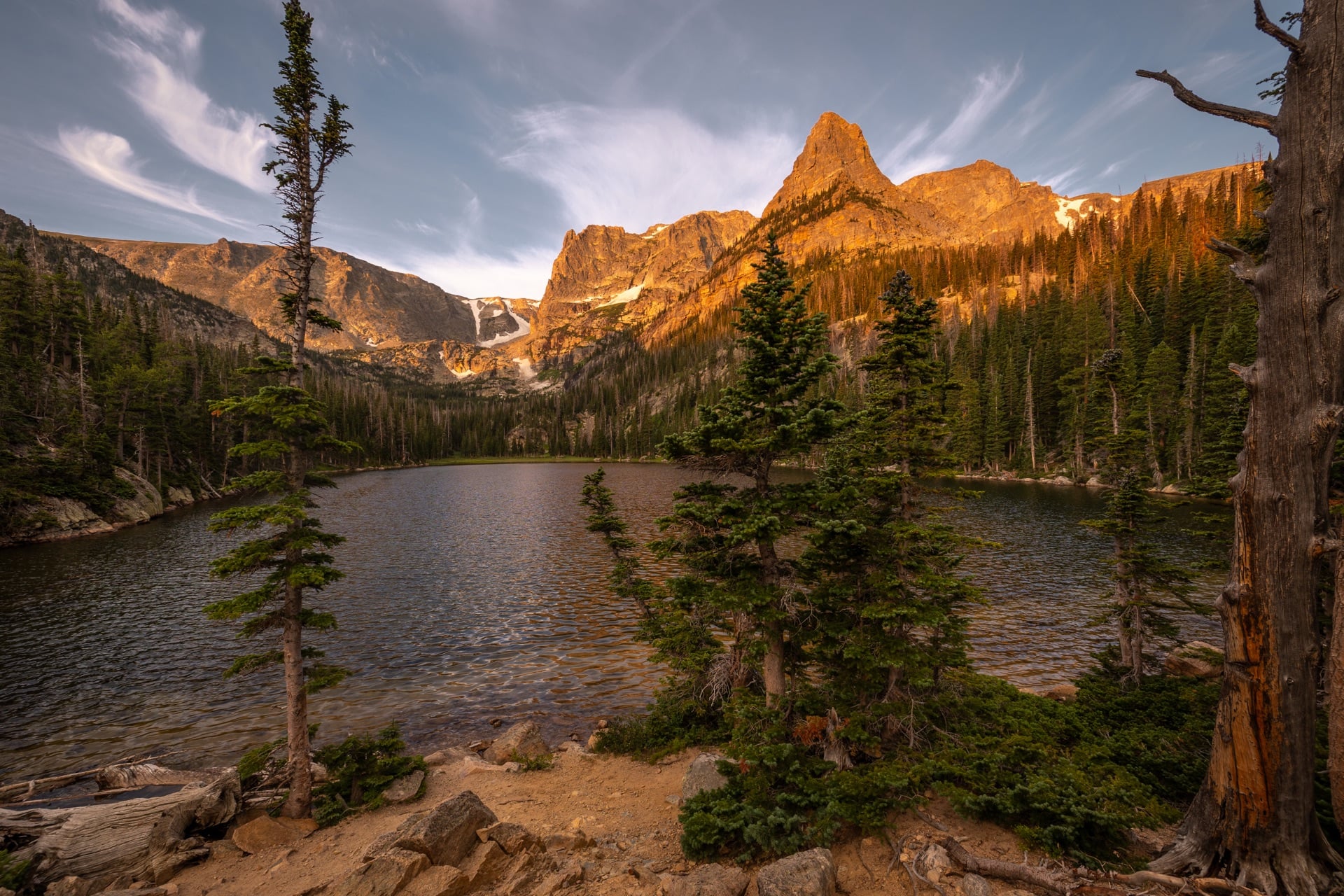
Our First Night by Odessa Lake
After the first kilometer of hiking, there is already almost no one around... Most visitors park at the parking lot and ultimately walk very little, so the trails are actually very quiet. In total, we complete a 46-kilometer loop with two nights of wild camping, the first beside a beautiful alpine lake, Odessa Lake. The loop takes us through very varied scenery: first vast pine forests dotted with beautiful alpine lakes, then, on the second day, higher and rockier terrain. The immense granite walls in this part of the Rockies are impressive, and once again it is difficult to convey the sheer scale of these landscapes in photographs.
Varied and Surprisingly Unafraid Wildlife
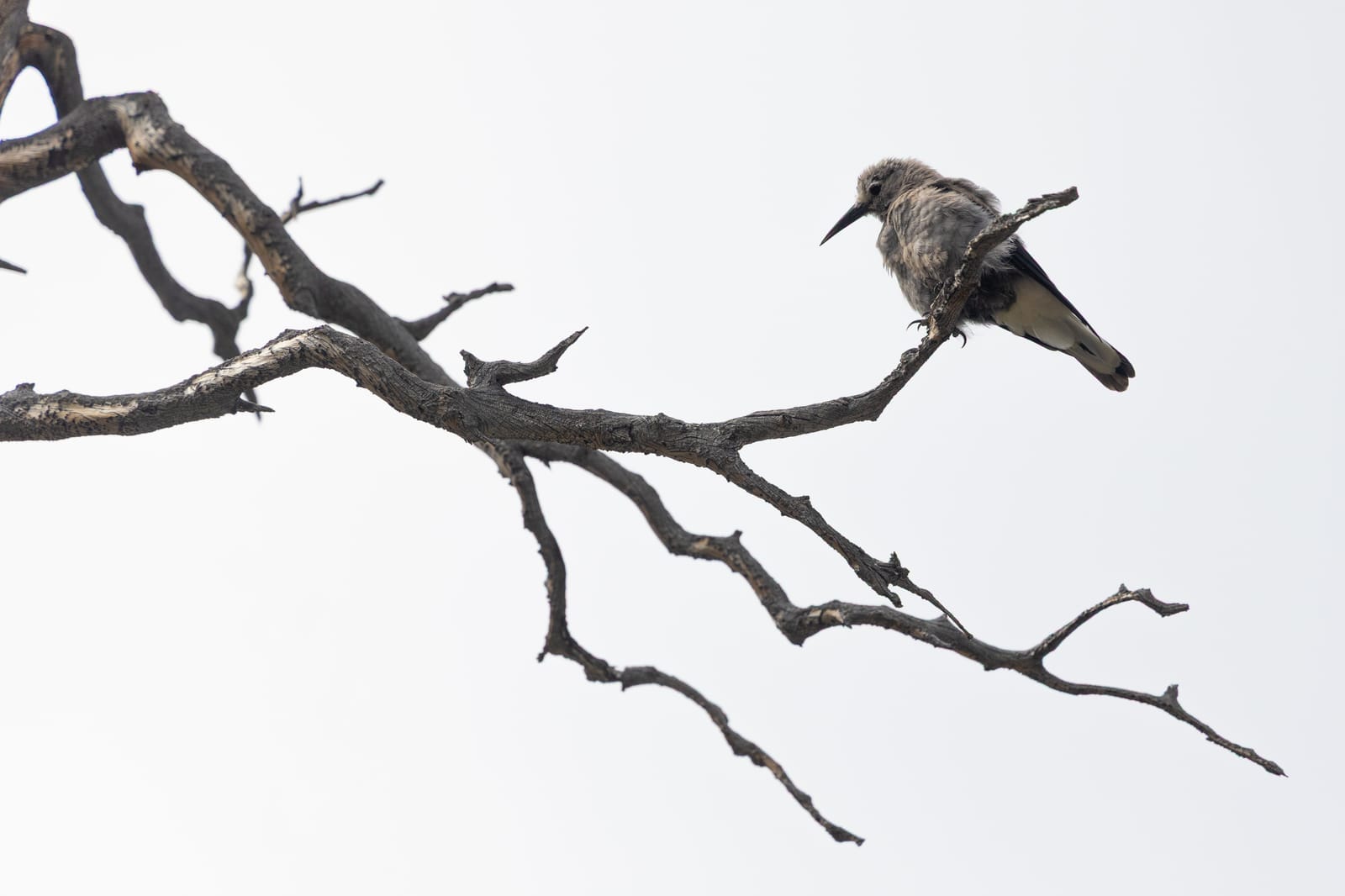
As for wildlife, we soon encountered our first elk, huge deer that are fairly common in the United States and not very wary of people. We also had many encounters with chipmunks, those very distinctive little squirrels. In general, wildlife is abundant and relatively easy to approach compared with France, probably because animals are not hunted inside national parks.
We were of course prepared for the possibility of meeting a bear. They are fairly common in the northwestern United States. When collecting a backcountry permit at the ranger station, hikers are required to carry a bear canister, a bear-proof container in which all food and scented items must be stored. At camp, it must be kept well away from the tent, and cooking must also take place at a certain distance. The aim is to keep smells around the campsite to an absolute minimum so as not to attract bears. It was fairly restrictive at first, but the rules are the same in every park where bears live, and we gradually got used to them as we visited more parks.
≈6 h 15drive
Arches National Park
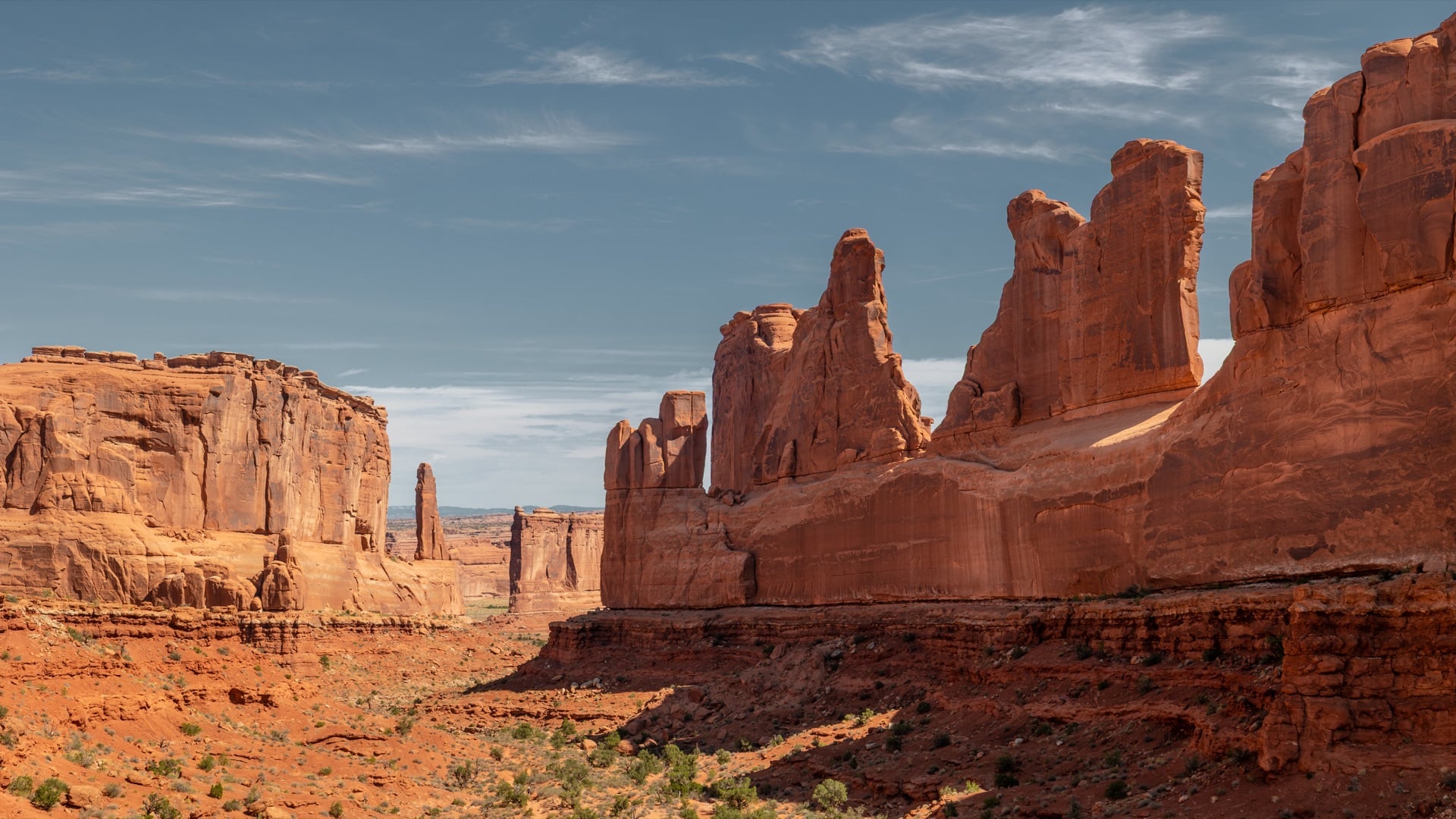
After Rocky Mountain, we gradually leave the forests and mountains of Colorado behind and head toward the much more arid landscapes of Utah. Arches National Park is our first real introduction to this region, with scenery very different from anything we know in Europe: ocher rock, natural arches...
Arches is fairly easy to explore on a short visit. There are a few hikes, but many points of interest can also be reached by car or after short walks. That makes it a good first stop in Utah: even with little time, you can already get a beautiful glimpse of these distinctive landscapes of the American West.
The gateway to Canyonlands
Near our campsite
Our Adventure in the West Begins at Canyonlands
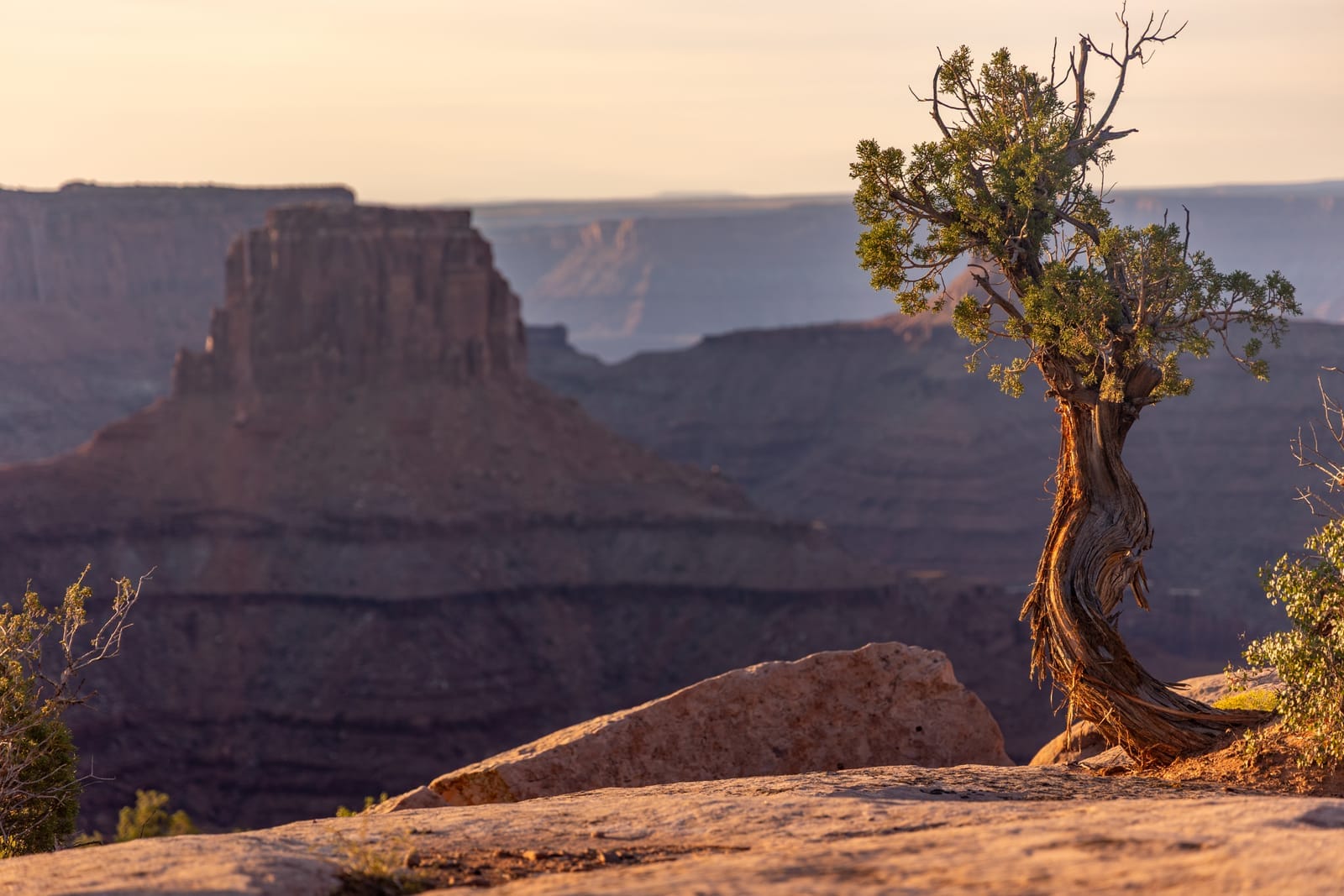
Before reaching Arches National Park, we spent a night near Canyonlands, camping beside a cliff with the tent pitched next to our 4x4. From camp, the view across the mesas gave us our first sense of the vast scale of the American West.
The following morning, we watched a beautiful sunrise from the tent as the colors shifted quickly across the cliffs and plateaus. It was a memorable first night in Utah before we continued toward Moab and the arches.
Double Arch
Not Much Hiking, but Plenty of Beautiful Arches
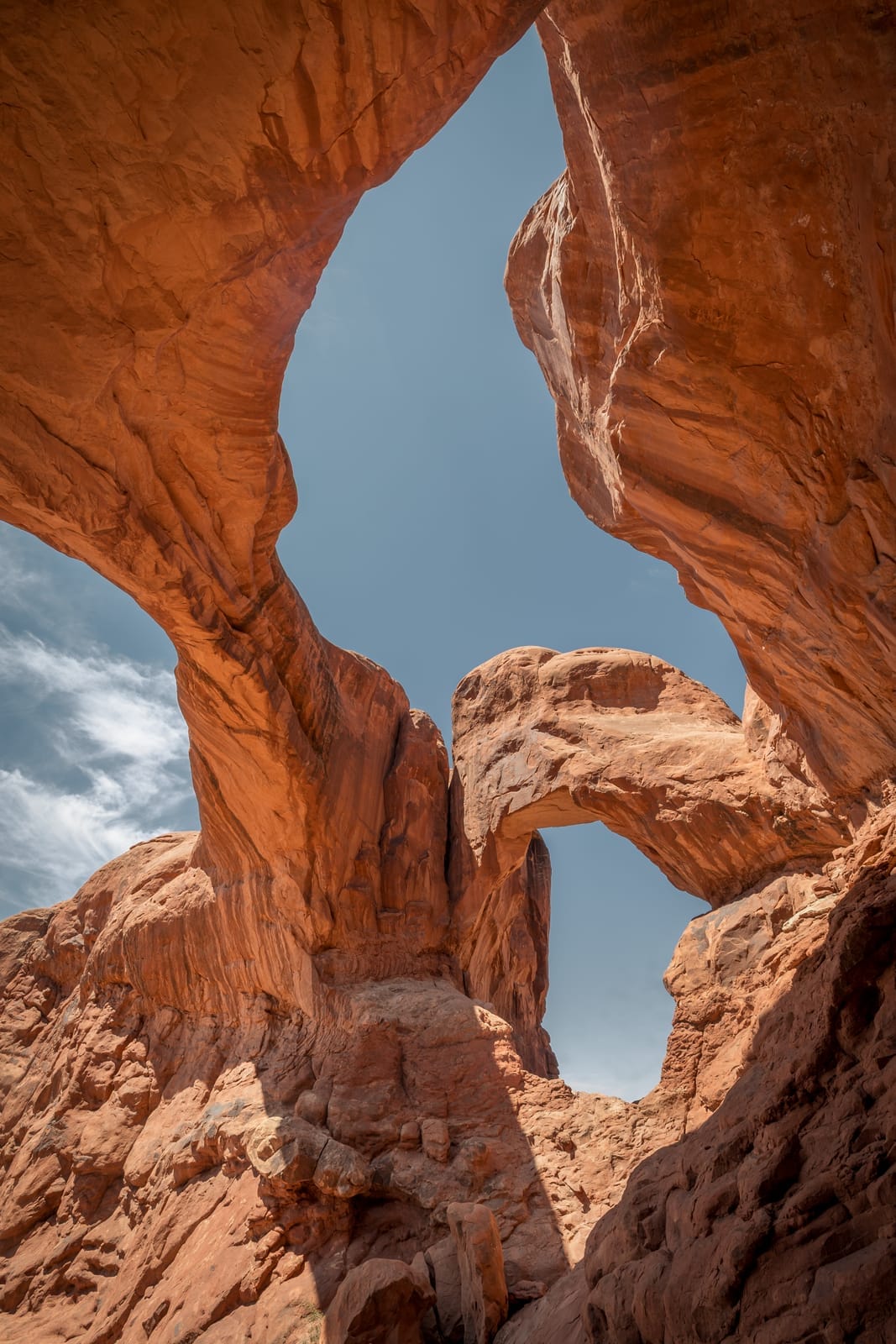
In the end, we stay only very briefly in Arches National Park. Barely a day, which is not much for such a vast park. We usually like to hike and take the time to get away from the most obvious routes, but this time our visit is fairly conventional: the Arches Scenic Drive, stops at the main viewpoints and only a few short walks. It is extremely hot, around 35 to 40°C, and the conditions do not exactly make us want to hike for hours. Even so, over the course of the day we discover several of the park's iconic areas: Double Arch, Petrified Dune Viewpoint, the viewpoint over Fiery Furnace, then the road to the far end of the park.
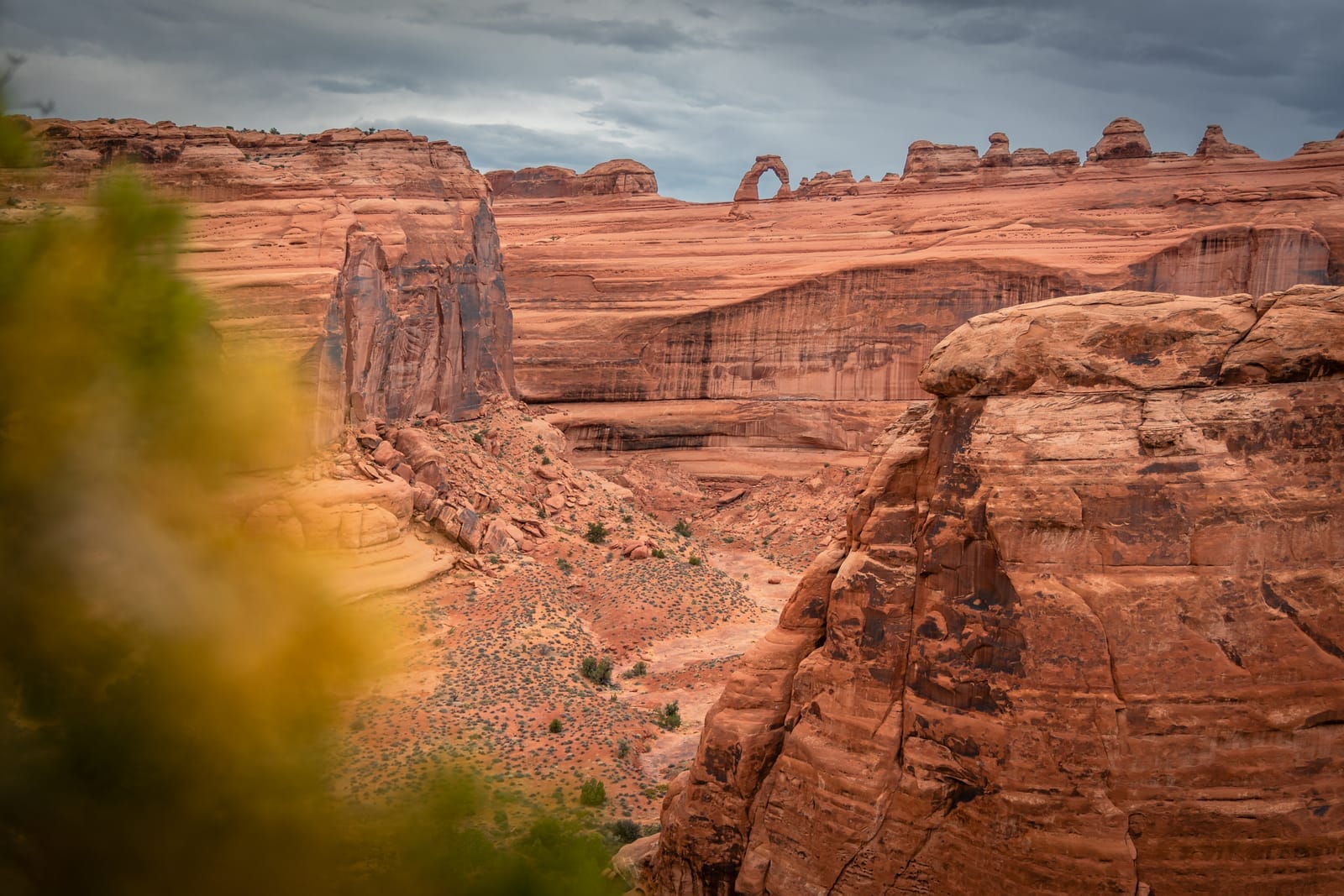
Delicate Arch reveals itself, tiny in the distance but far from the crowds
Devil's Garden
At Devil's Garden, we walked a short loop that took us past several arches in a slightly more remote setting. It was probably one of the moments we enjoyed most that day, even though we were a little frustrated not to have explored Arches in greater depth. At the end of the day, we went to watch the sunset near Delicate Arch, the park's best-known arch. Rather than walking all the way up to it, we took a short trail to see it from a little farther away. The light was beautiful, the landscape took on warm colors, and even from a distance the place made quite an impression. We had originally hoped to sleep in the park with a backcountry permit, but everything was already booked. That evening, we therefore had to leave Arches and pitch the tent elsewhere before driving toward Monument Valley the next day.
≈3 h 15drive
Monument Valley
Monument Valley is not a national park, but for us it was a stop we simply could not miss along the way. After Arches, we headed toward the Navajo Nation. We had really been looking forward to discovering this iconic place in the American West, which we had of course seen many times in photographs before going there.
Even the drive takes us through incredible scenery
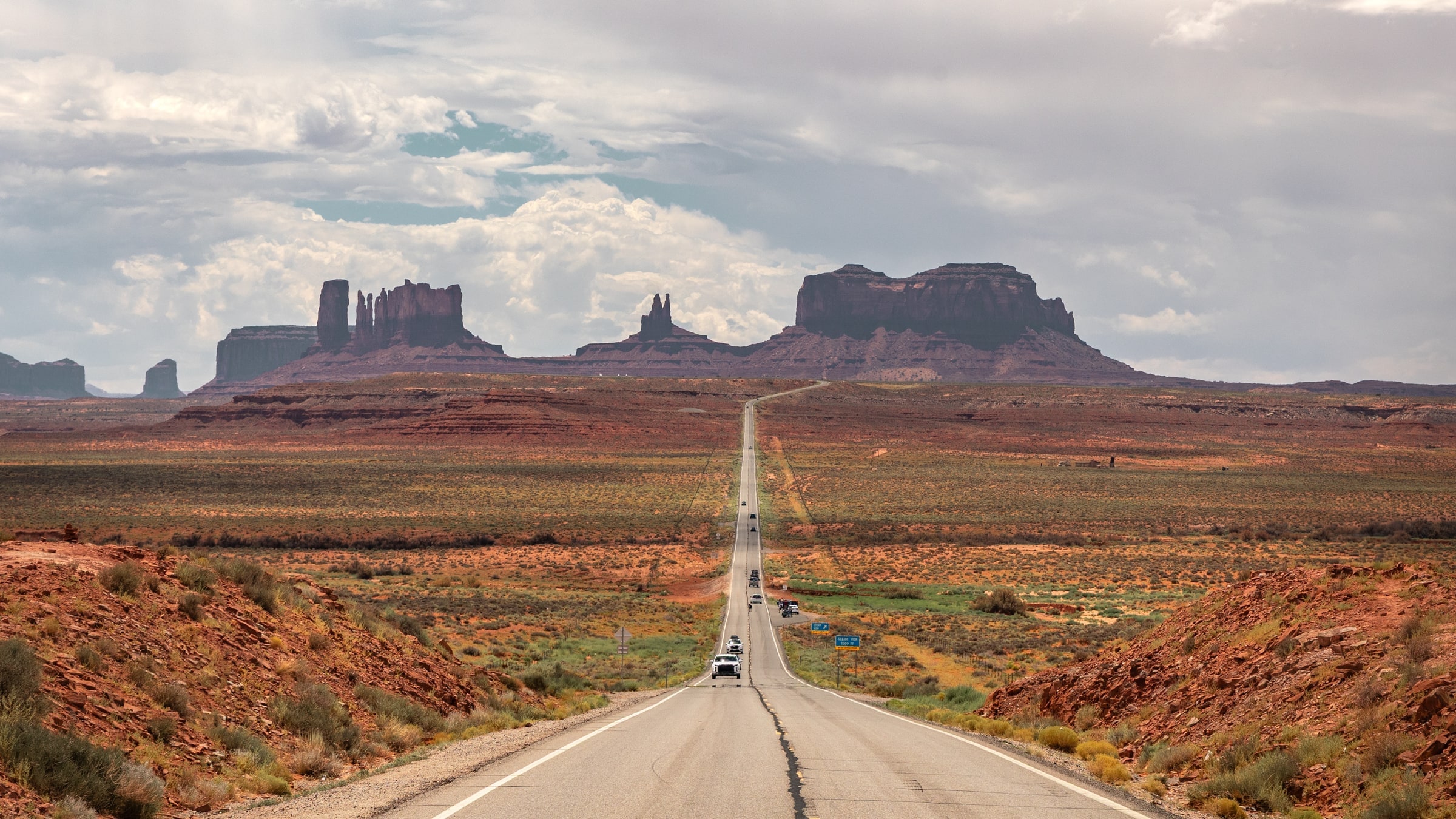
Forrest Gump Point
Forrest Gump Point
Before reaching Monument Valley, we stopped at Forrest Gump Point. It is a very touristy place, but I love the film, so I was still happy to stop there and take a photograph at the spot where Forrest Gump is seen running along the road.
Our visit there was ultimately fairly short. We had originally hoped to sleep in the area, but the options are very limited. Monument Valley is managed by the Navajo Nation under strict rules, and without a guide you cannot really wander freely as you would in a typical national park. Tours with a Navajo guide take visitors farther, but they also represent a fairly significant expense.
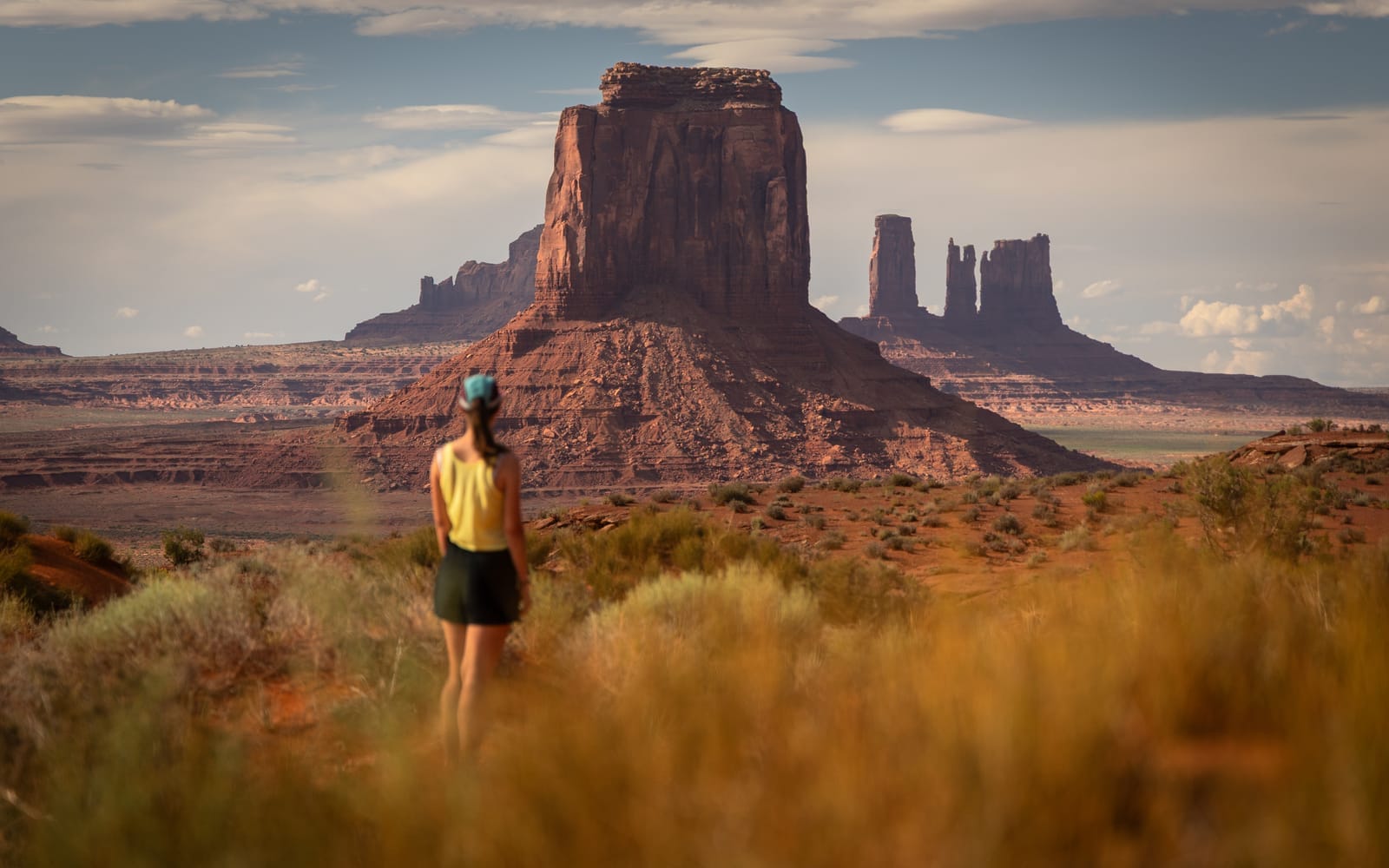
In front of the mesas
A Beautiful 4X4 Loop Through Monument Valley
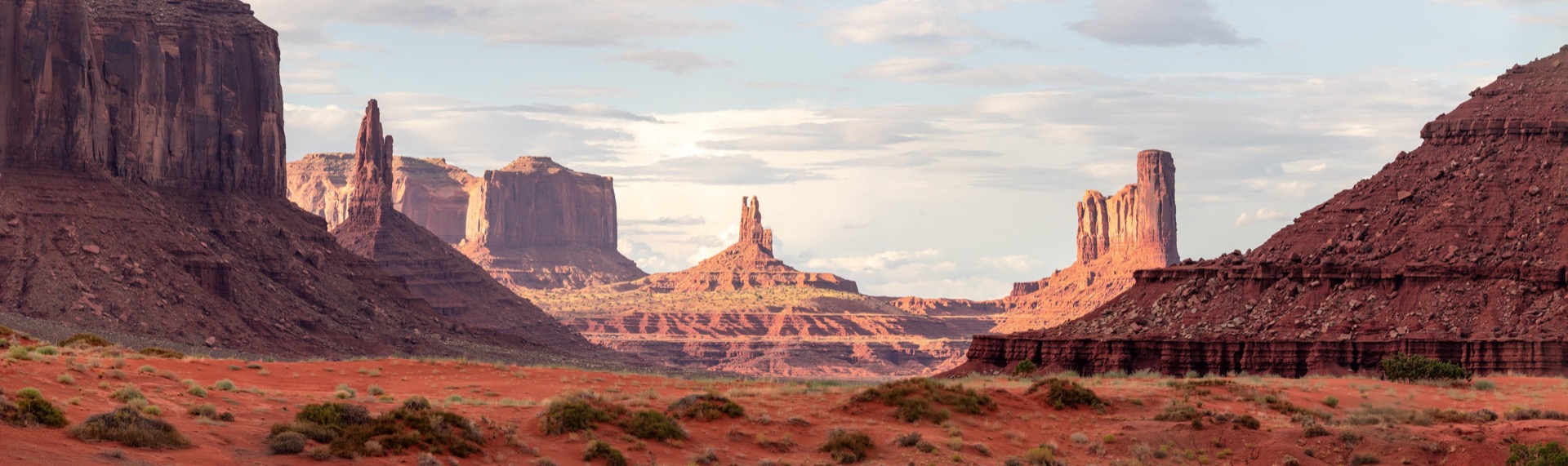
We therefore follow the Valley Drive by car, stopping regularly near the mesas to take photographs. It is a little frustrating not to be able to walk farther, especially in a place like this. The visit quickly feels very structured: you follow the track, stop whenever you want, take photographs, then set off again. Despite that, we really love the place. The mesas are impressive rock formations, the colors in the rock are magnificent, and the late afternoon light, with a storm in the distance, makes the landscape even more beautiful.
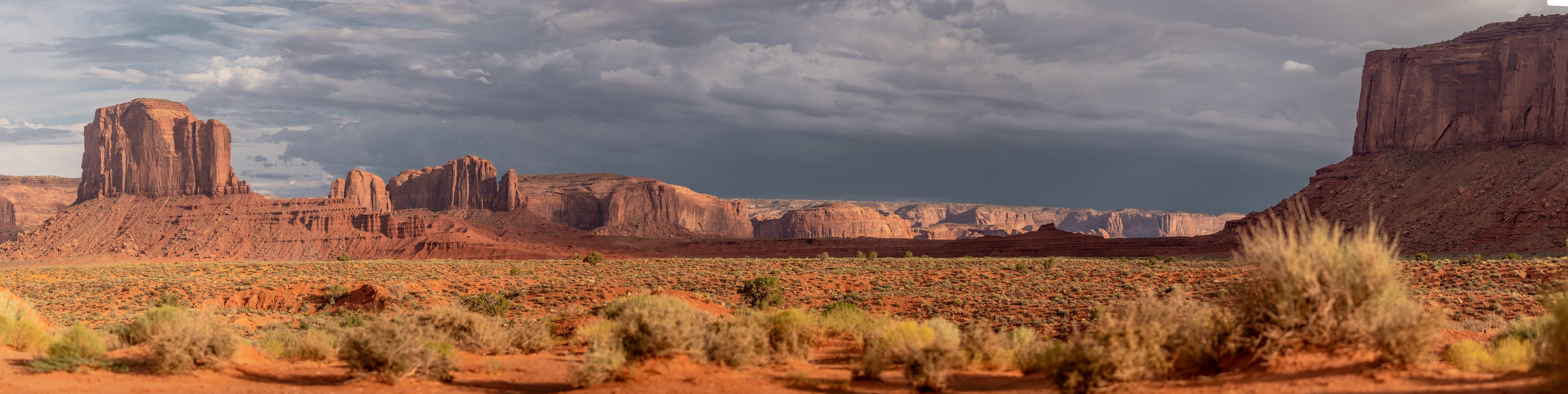
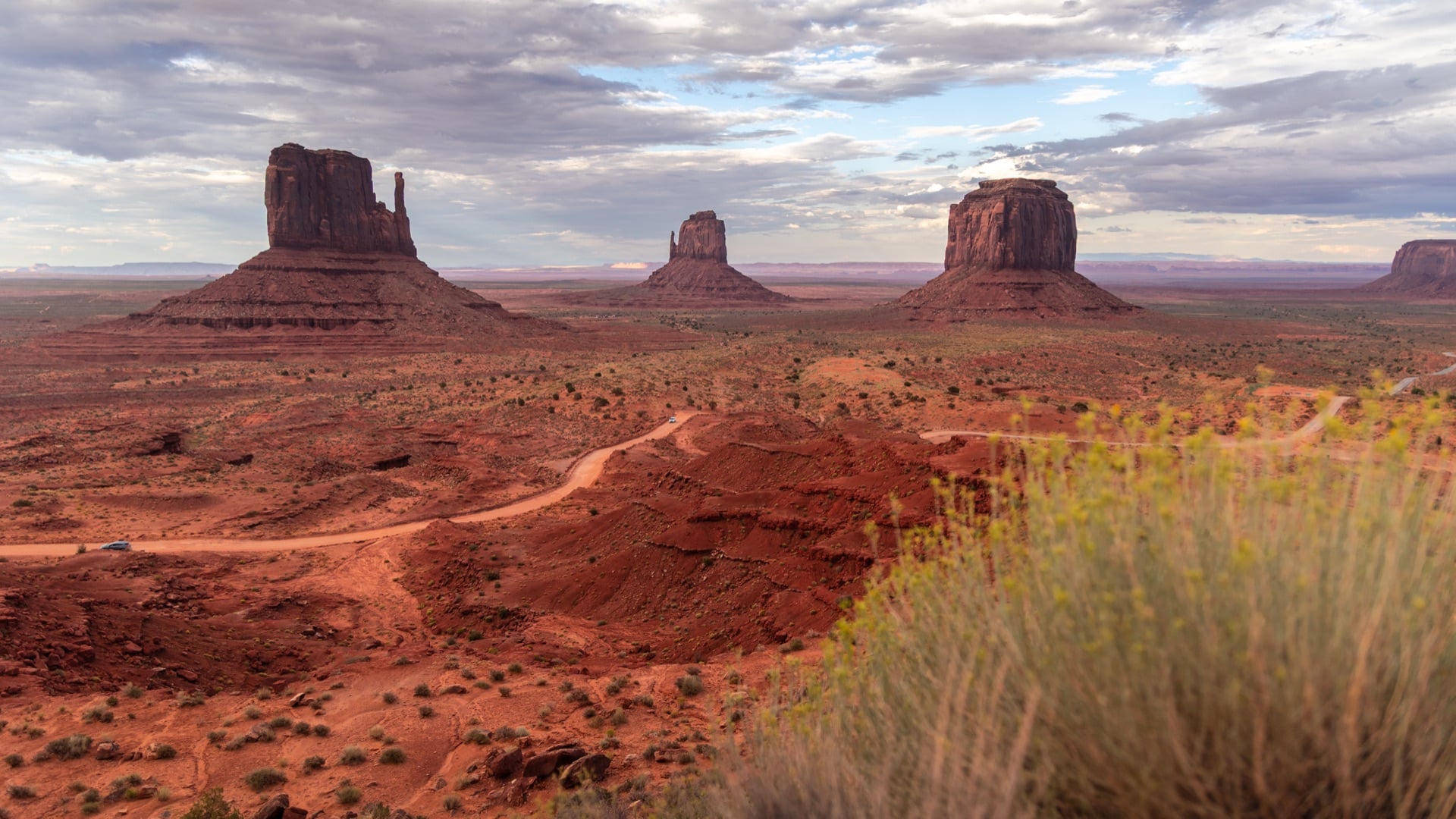
The famous view beside the parking area
Very Touristy, but It Lives Up to Its Reputation
It is clearly a very touristy place, and at times we felt as though we were being treated a little like cattle... That is the only real downside we remember from the visit, because apart from that, Monument Valley really left its mark on us. Even without hiking, even in just one day, it is easy to understand why this place has become one of the best-known landscapes of the American West.
Leaving Monument Valley...
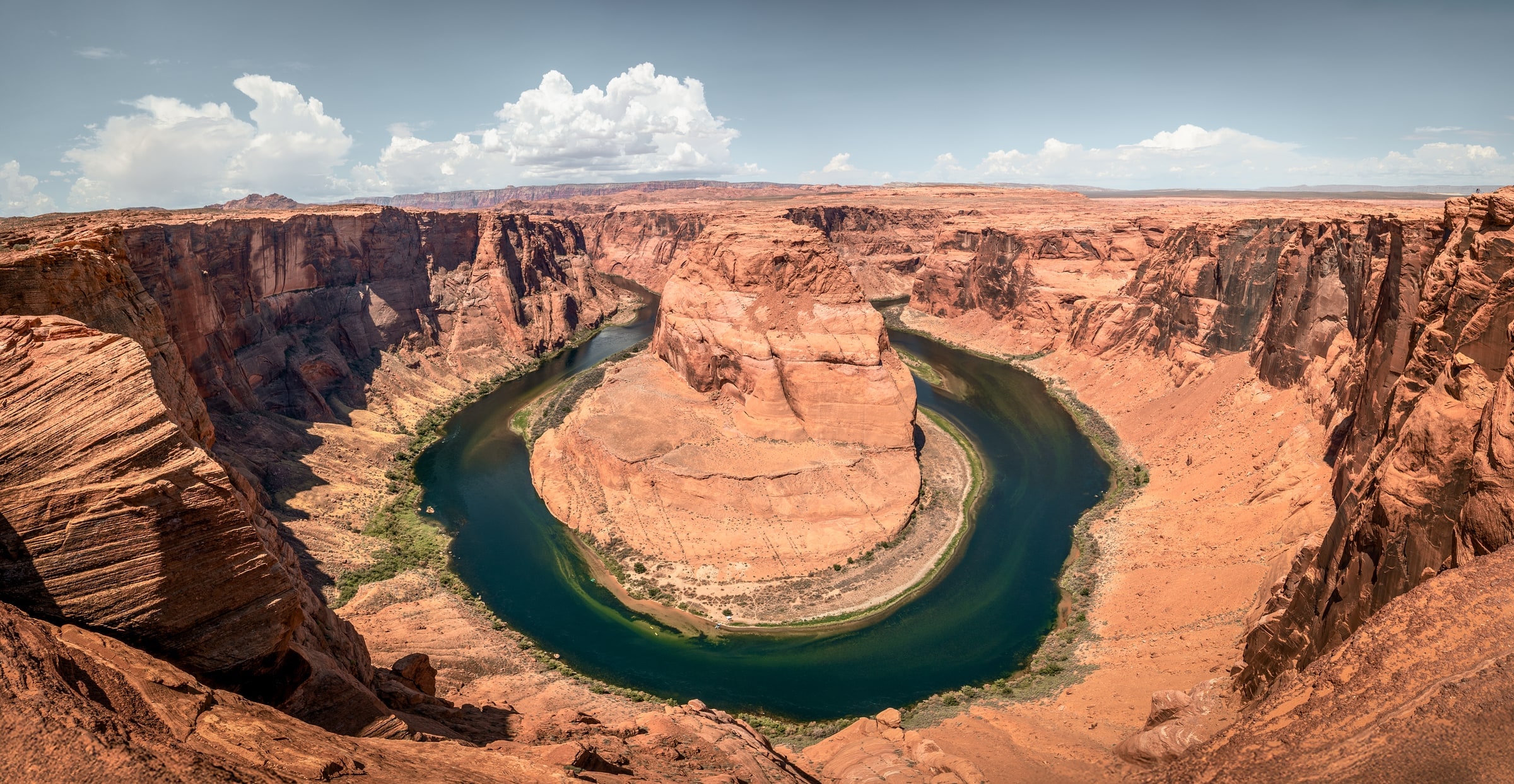
A Stop at Horseshoe Bend
The next morning, we continued toward Grand Canyon National Park. The drive was long, so we stopped at Horseshoe Bend near Page. It is another very popular site, reached by a short walk from the parking lot, with crowds gathering above the famous bend of the Colorado River. In the intense heat, that short walk was more than enough. We took the classic photograph like everyone else, but we were still glad to have seen it before continuing to the Grand Canyon.
≈5 hdrive
Grand Canyon National Park
Grand Canyon National Park was naturally one of the places we wanted to see during this journey. But while planning this stop, we quickly realized that it is not really a park you can visit in its entirety. It is immense, with several areas very far from one another, and discovering its different sides would almost require a trip of its own. With our two-week itinerary between Denver and Los Angeles, we therefore had to choose. We decided to head to the North Rim.
The scenery along the roads of the Southwest never ceases to amaze us
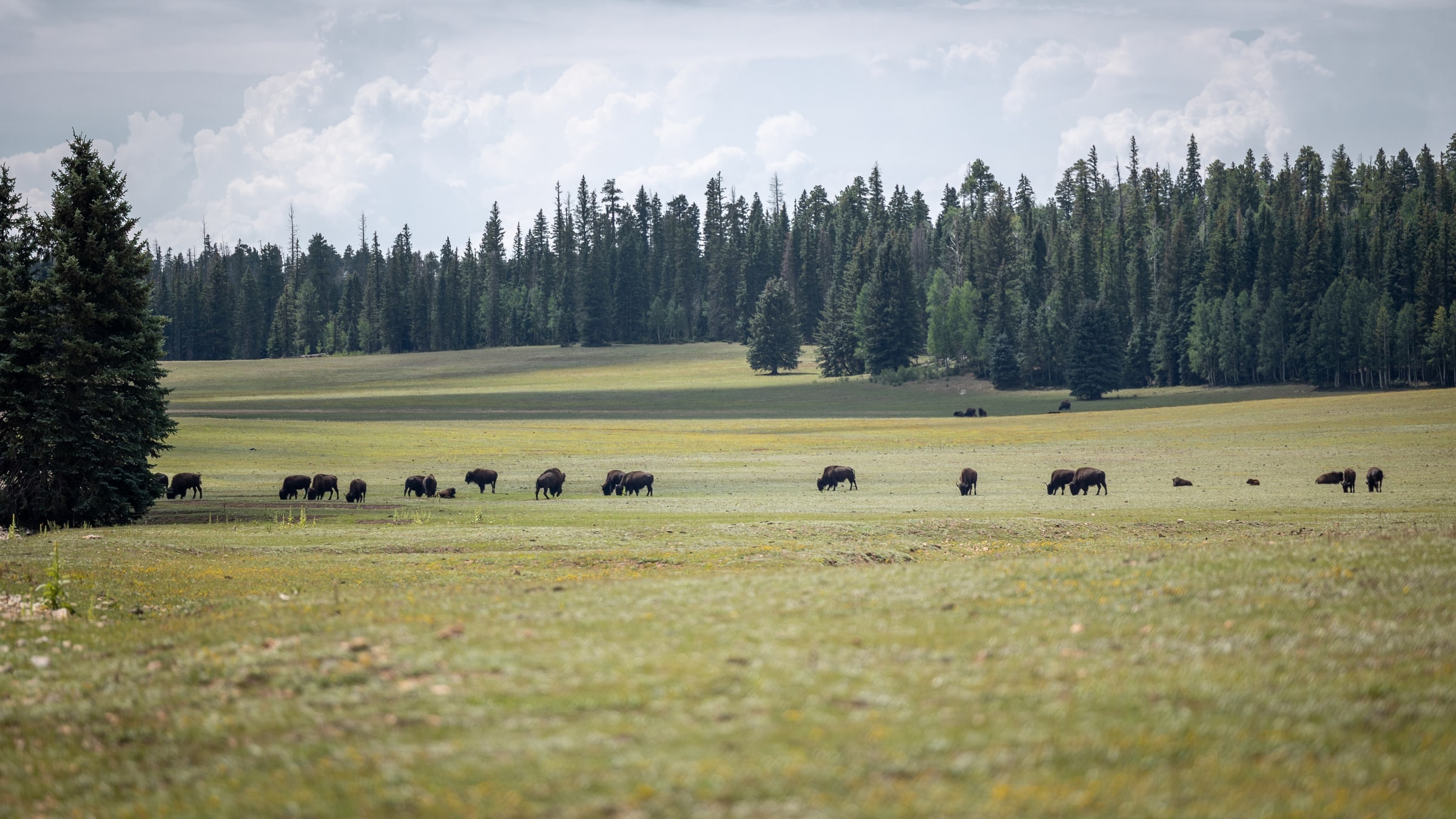
Arrival at the Grand Canyon's North Entrance
After Horseshoe Bend and the very dry landscapes around Page, the contrast was quite surprising. The road climbed gradually toward the Kaibab Plateau, where we even saw bison. We arrived in a much greener and cooler environment at more than 2,000 meters above sea level. It was rather unexpected, because the Grand Canyon is easily associated with an arid and very hot landscape, whereas this part of the North Rim gave almost the opposite impression.
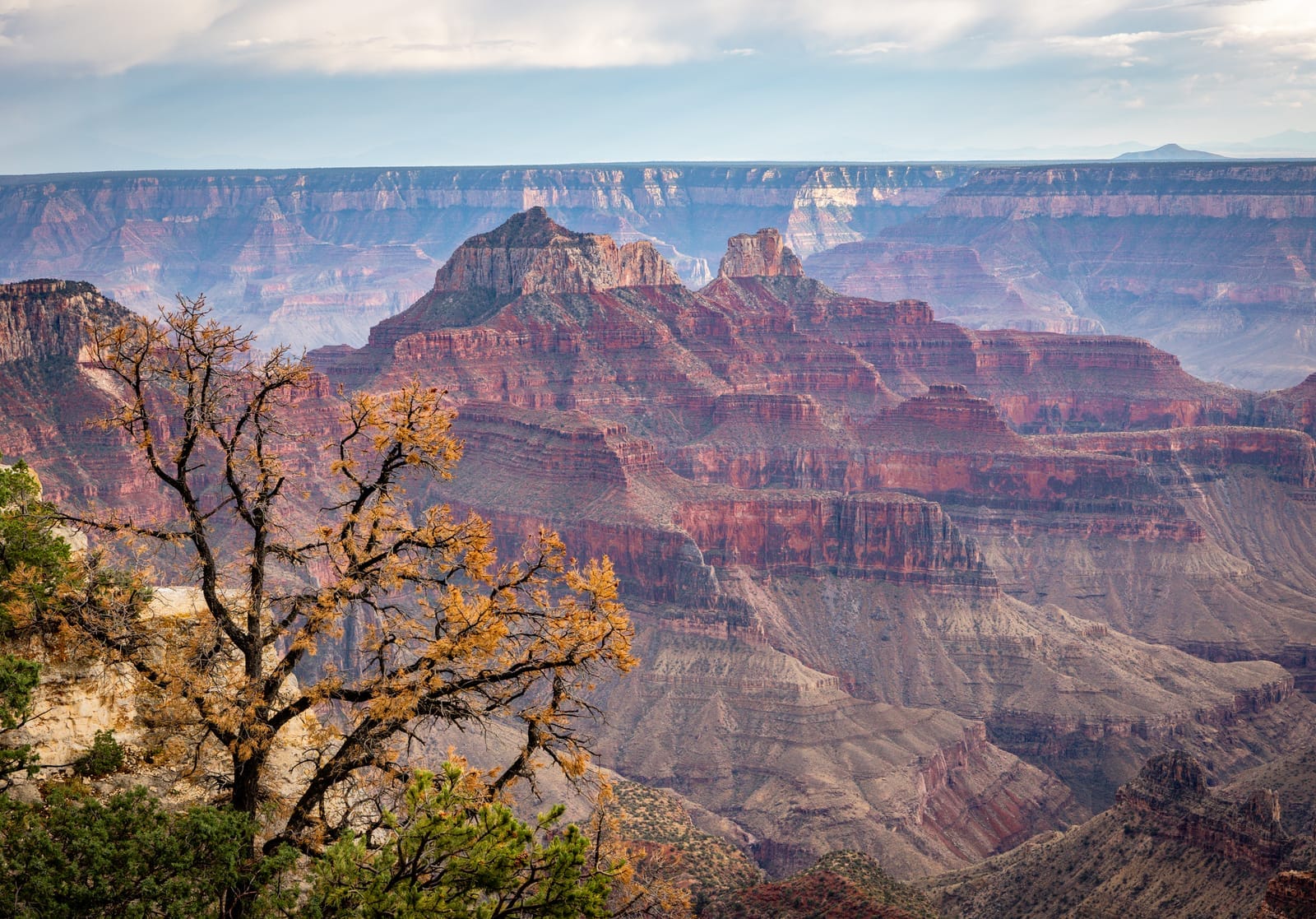
Bright Angel Point Trail
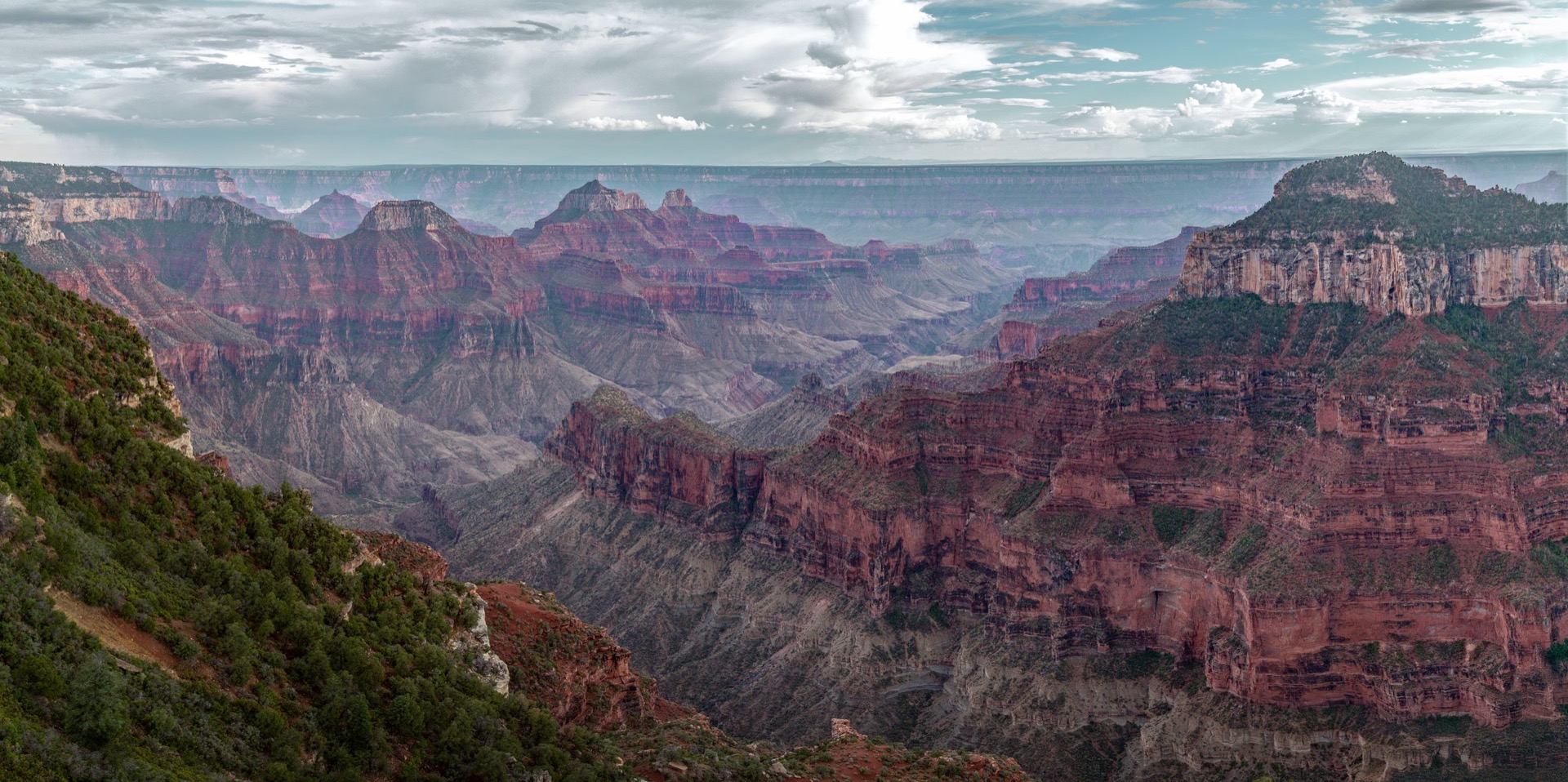
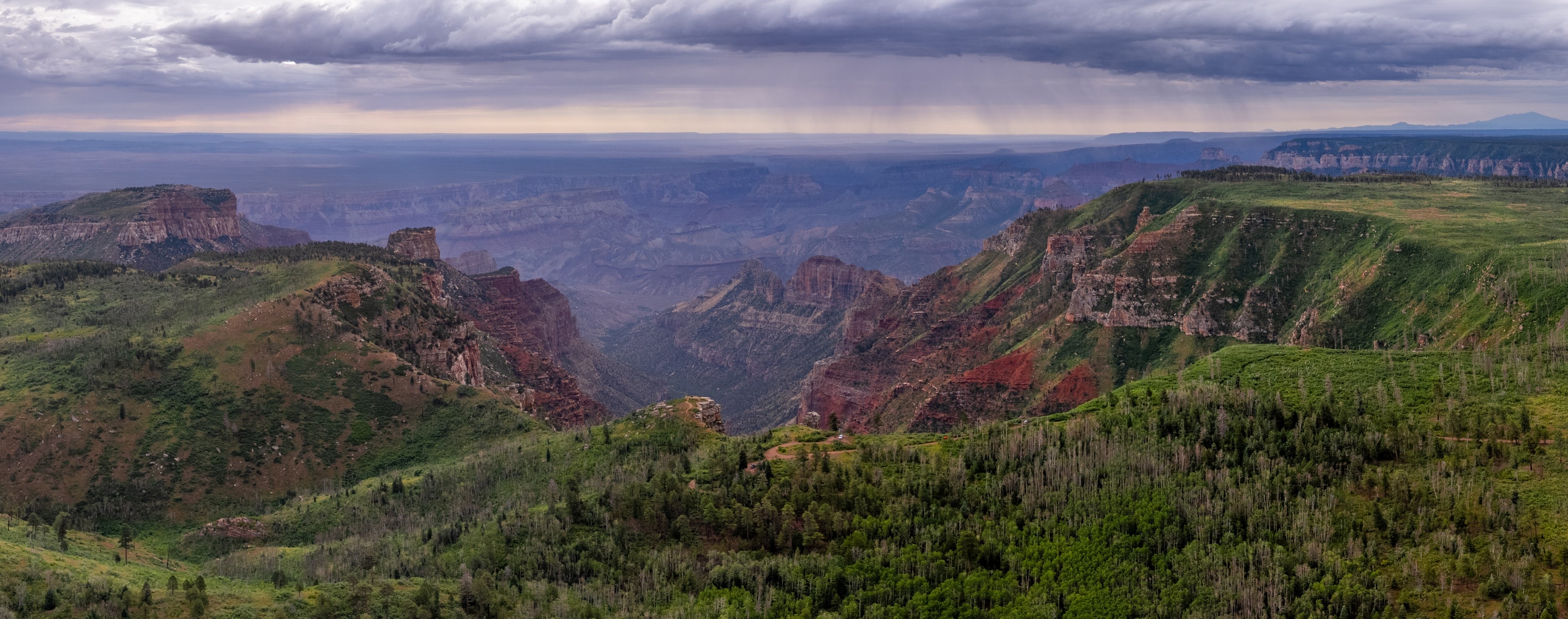
Once there, we first went to the Grand Canyon Lodge, the large historic building standing on the edge of the canyon. From there, we took a short walk along the Bright Angel Point Trail, which quickly reaches several viewpoints. At first it rained a little, then the sky eventually cleared. The landscape finally opened up in front of us, with the canyon stretching as far as the eye could see.
Even when you see only a small part of it, the Grand Canyon is immediately impressive. It is immense, difficult to grasp and almost impossible to compare with anything else. The park's reputation makes perfect sense once you are standing before this vast expanse. We did not do a long hike that day: in August, the heat inside the canyon is not really suited to that kind of plan, and in any case we did not have a permit to sleep in the park.
A Windy Night Just Outside the Park
Instead, we went looking for a dispersed camping spot near the edge of the park. We eventually pitched the tent beside a cliff, with an incredible view over the Grand Canyon. The night was very windy, but the place was exceptional. We really felt as though we had front-row seats, alone before that vast landscape.
Our tent with a front-row view
Cape Royal Road
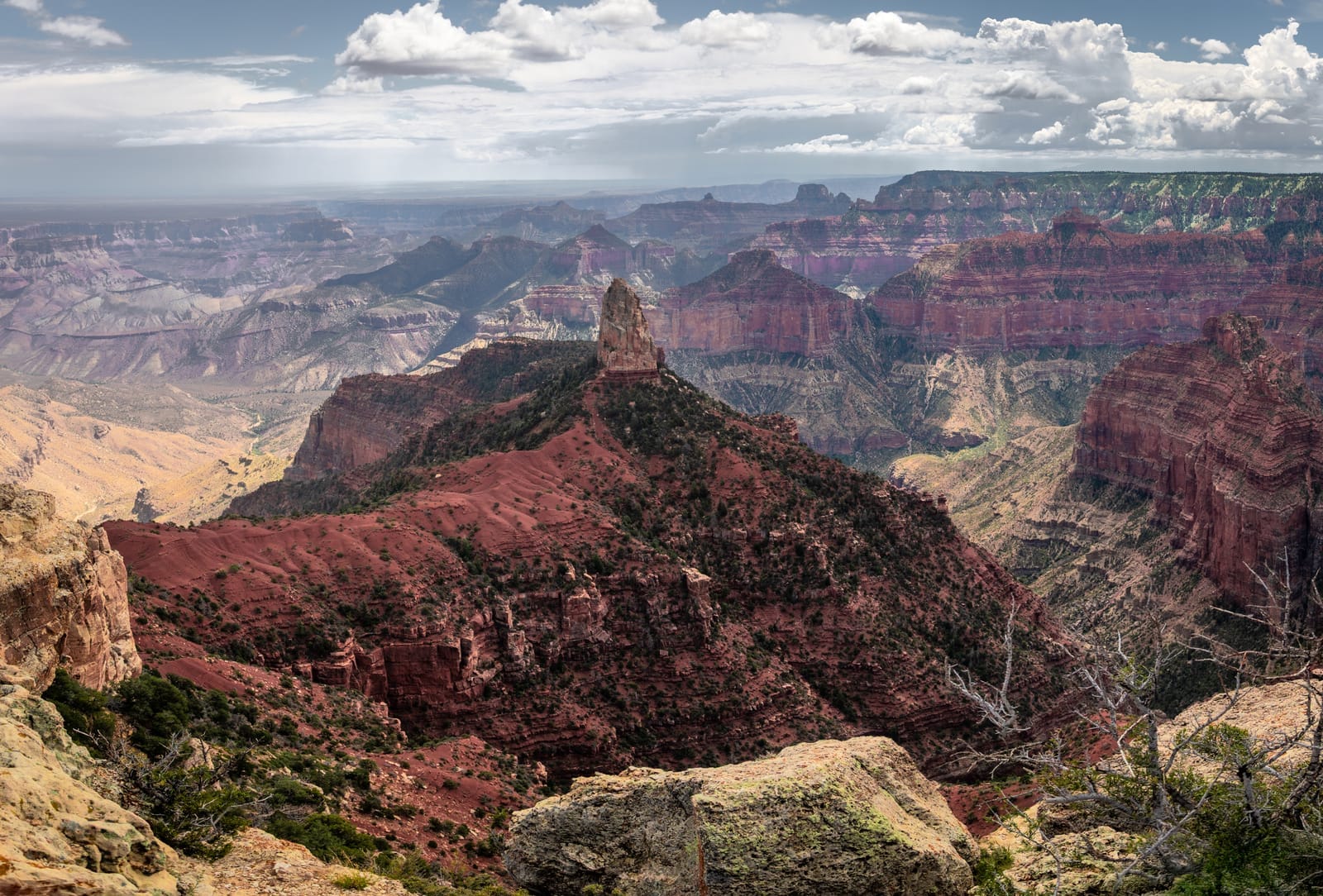
The next morning, before continuing to Bryce Canyon National Park, we drove Cape Royal Road, one of the North Rim's scenic roads. We stopped at several viewpoints, including Point Imperial, Vista Encantada, Roosevelt Point, Walhalla Overlook, Angel's Window and Cape Royal. It was warmer than the day before, but the landscapes were still truly beautiful. Despite spending two days there, we left with a slight sense of unfinished business. The Grand Canyon is one of those parks we would like to return to, probably in another season, so that we could walk farther without the very high summer temperatures.
≈4 hdrive
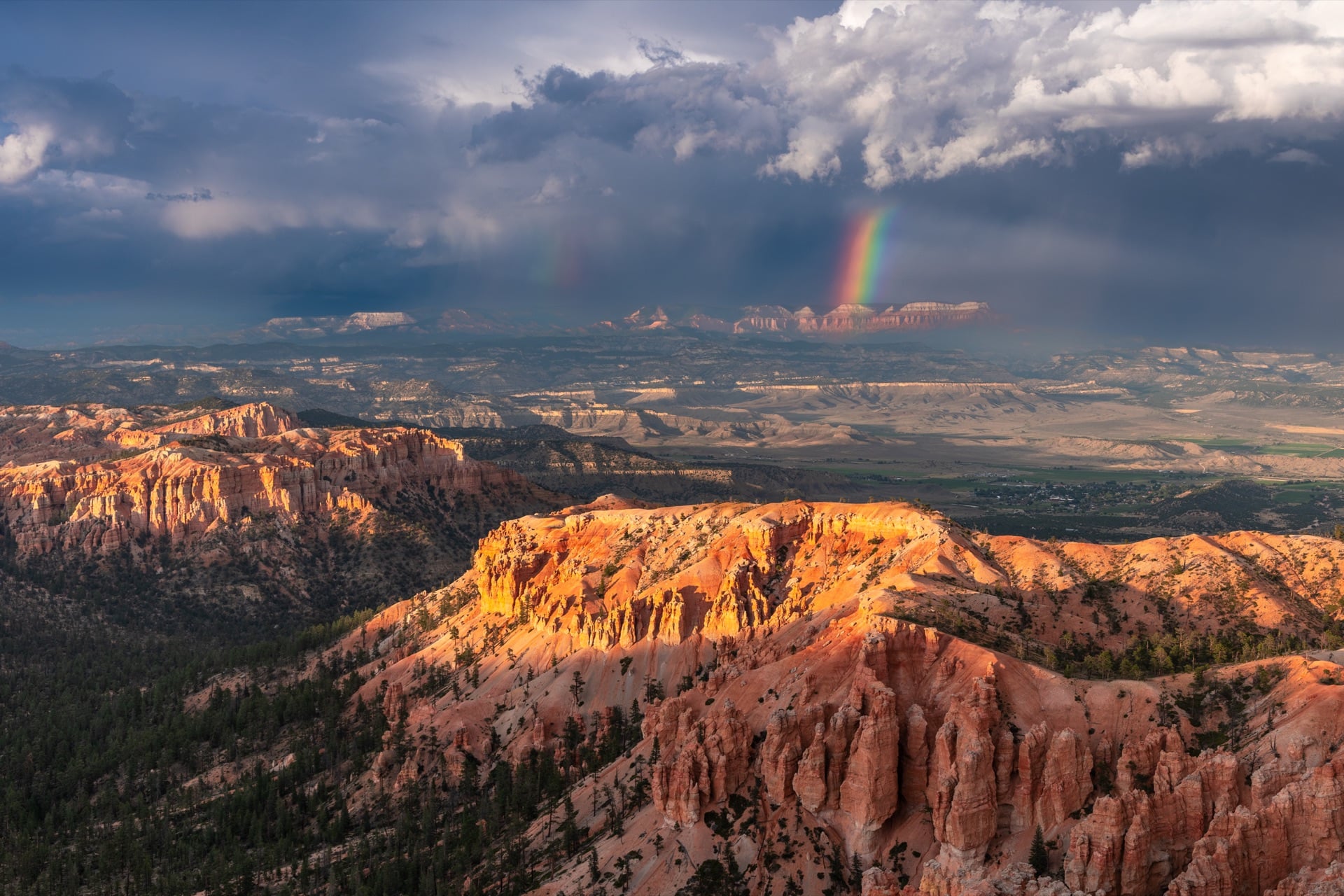
Bryce Canyon National Park
Bryce Canyon National Park was the highlight of our trip. The other parks were beautiful too, but this one left a particular impression on us. With its hoodoos and very unusual landscapes, Bryce Canyon looks unlike anything we can see in Europe. We spent two days there, and it was also one of the parks where we walked the most.
Approaching Bryce Canyon and seeing our first hoodoos
An Evening Arrival at Sunset Point
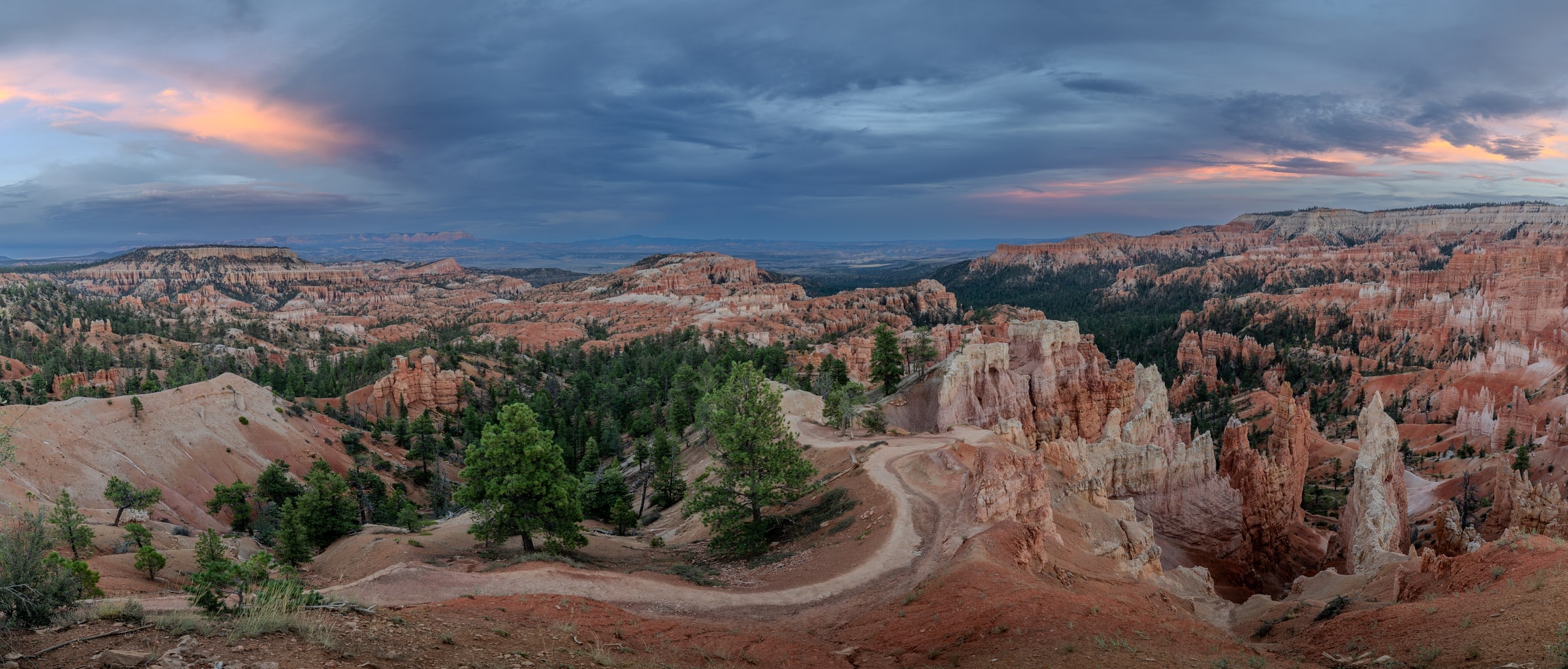
After leaving the Grand Canyon, we spent much of the day driving and reached Bryce Canyon in the late afternoon. We arrived just in time to watch the sunset at Sunset Point. The light fell across the amphitheater and gave us a first glimpse of the park. From that first evening, we felt that we were going to really like the place.
A First Day on the Peekaboo Loop
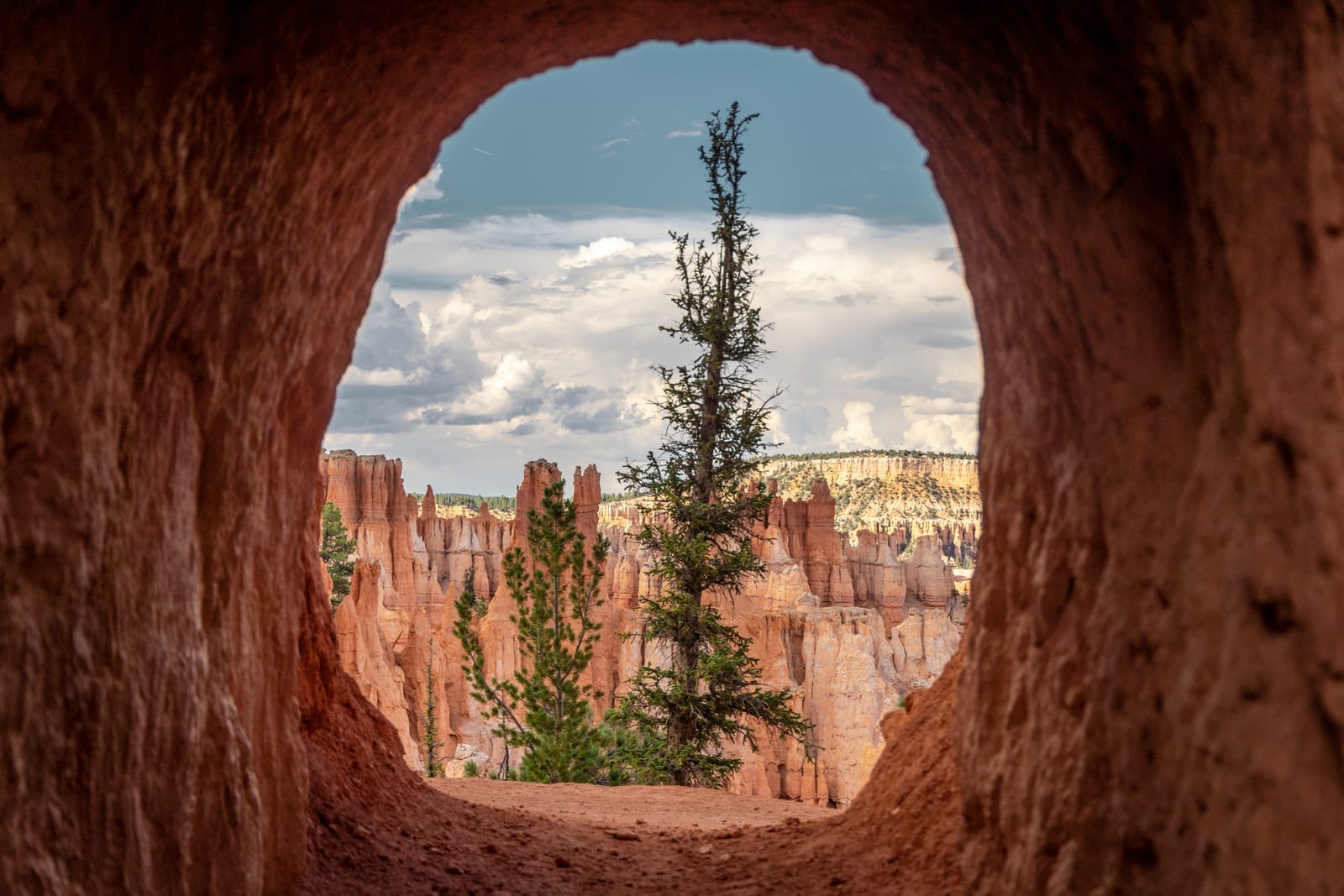
The next morning, for our first full day there, we set out on the Peekaboo Loop, a roughly 10-kilometer trail that we really enjoyed. It gives an excellent overview of Bryce Canyon when time is limited: the trail descends into the amphitheater, passes among the hoodoos, and the viewpoints follow one after another, giving a real sense of heading deeper into the park. We were also surprised not to find that many people there. Because Bryce Canyon is at altitude, it is much cooler than the other parks on the trip, which makes the hike especially pleasant.
At the end of the day, we returned to Sunrise Point and Sunset Point to take a few photographs from the edge of the amphitheater. That evening, we slept in a hotel in Tropic. It was one of the few nights of the trip that we spent outside our tent, but these breaks also did us good: they gave us a chance to wash a few things and rest a little more comfortably.
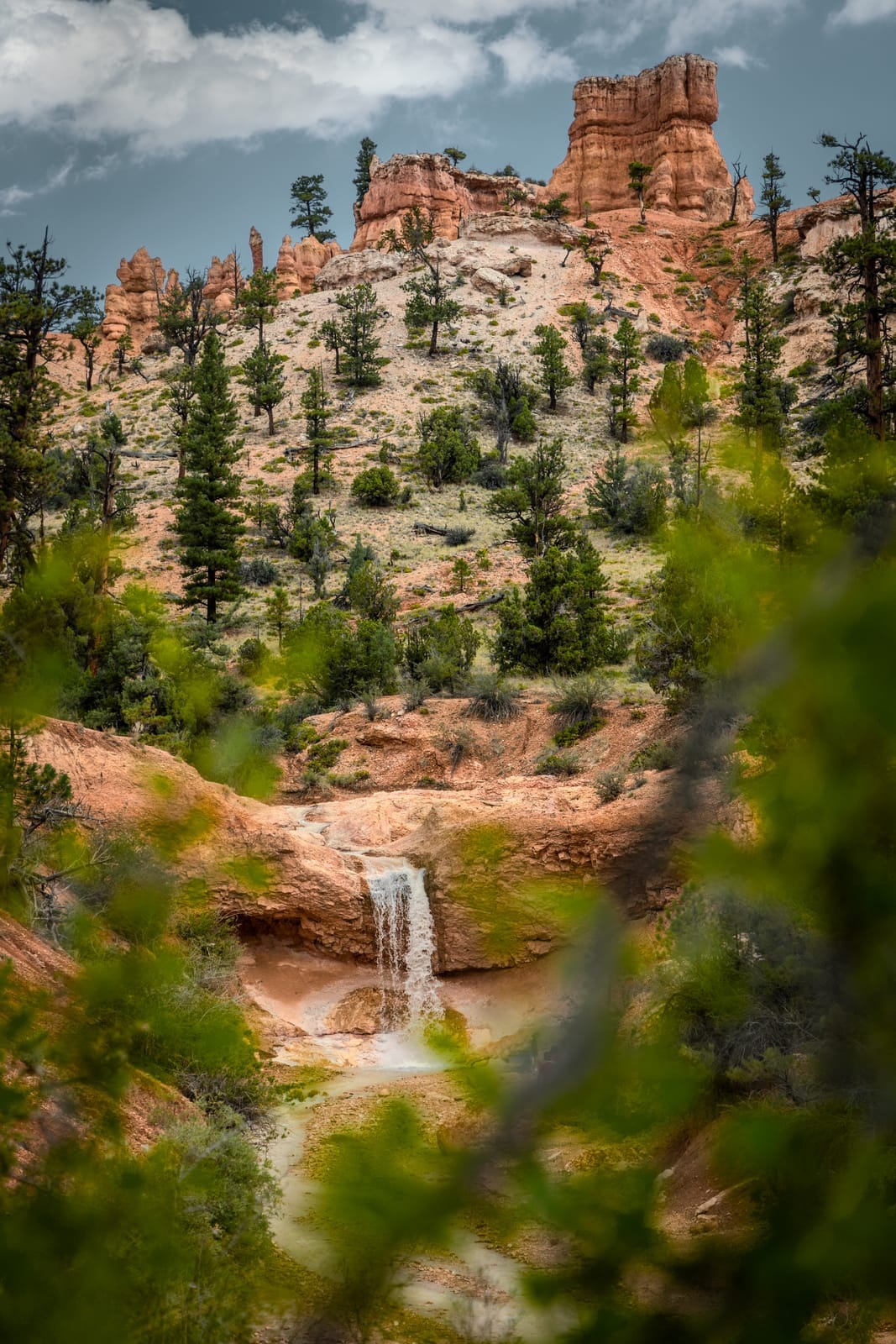
Mossy Cave Trail and the Scenic Drive the Next Day
On our second day, we began with the shorter Mossy Cave Trail before following the Bryce Canyon Scenic Drive. Along the way, we stopped at Inspiration Point, Bryce Point, Natural Bridge, Agua Canyon, Rainbow Point and Yovimpa Point. This allowed us to discover other views of the park, although the landscapes around the amphitheater were still the ones that left the strongest impression on us.
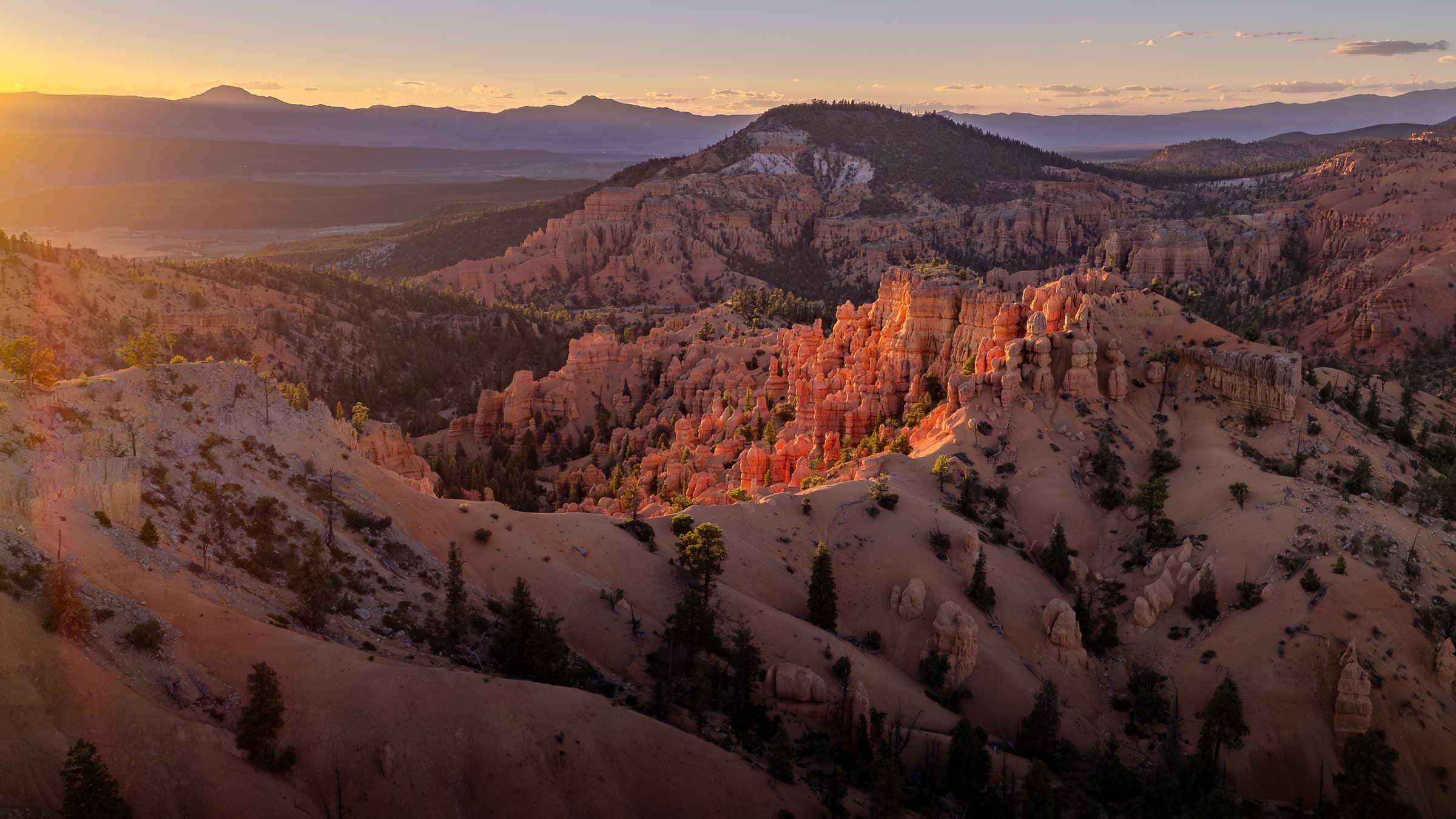
A Night in Dixie National Forest
That evening, we went to sleep near Red Canyon in Dixie National Forest. It is a beautiful alternative to Bryce Canyon: the landscapes are very similar to those in the park, with hoodoos and red rock, but without the same national park restrictions. We could therefore pitch the tent in a magnificent setting, almost among the formations themselves. We spent a beautiful evening and a really enjoyable night there before continuing toward Zion National Park the next day.
Alone among the hoodoos
≈1 h 30drive
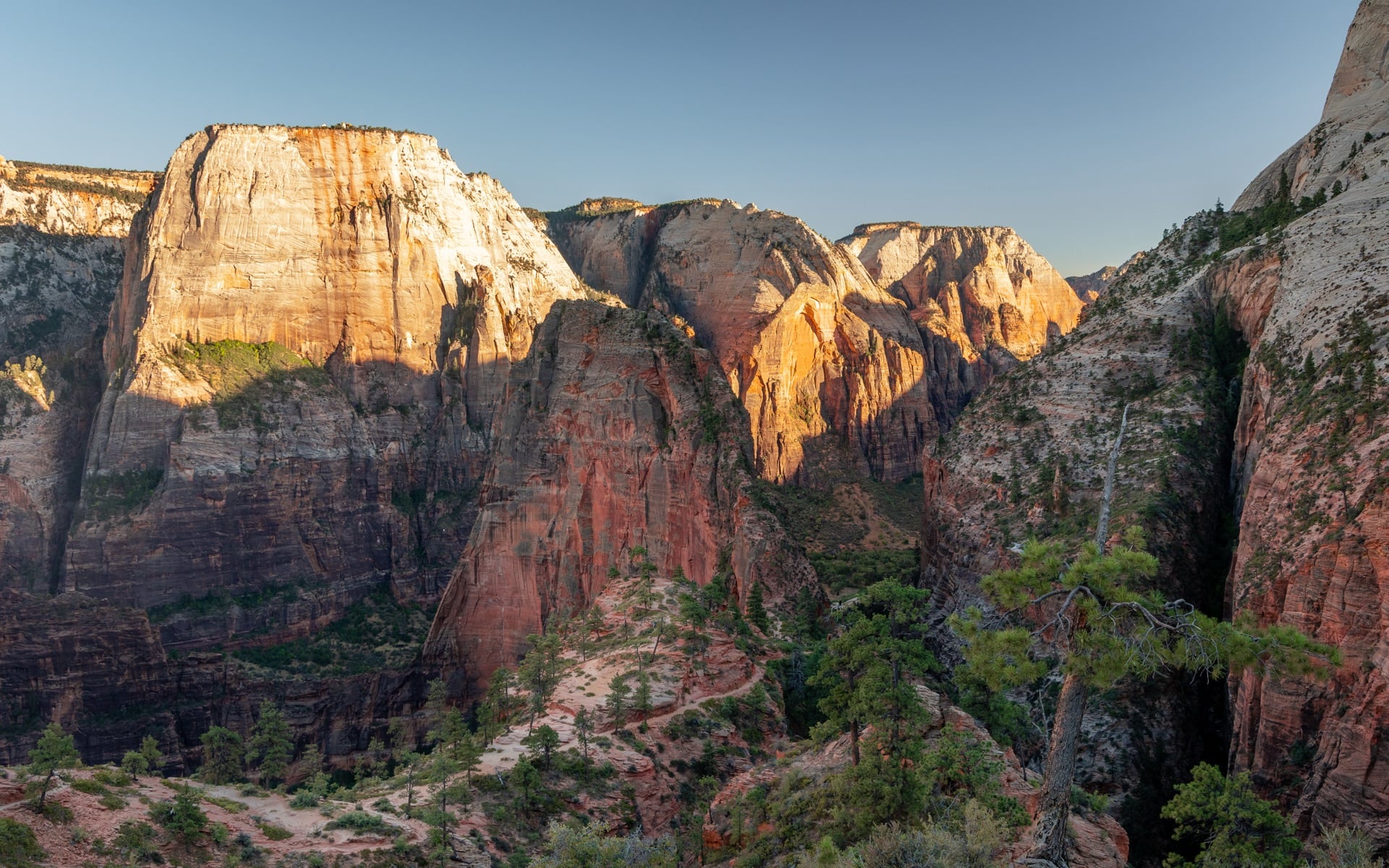
Zion National Park
Zion National Park more or less marked the end of our journey through the great parks of the American West. After Zion, what remained was mainly the long drive to Los Angeles. The route from Bryce Canyon is not very long, so we left the park in the late morning and arrived at Zion in the early afternoon.
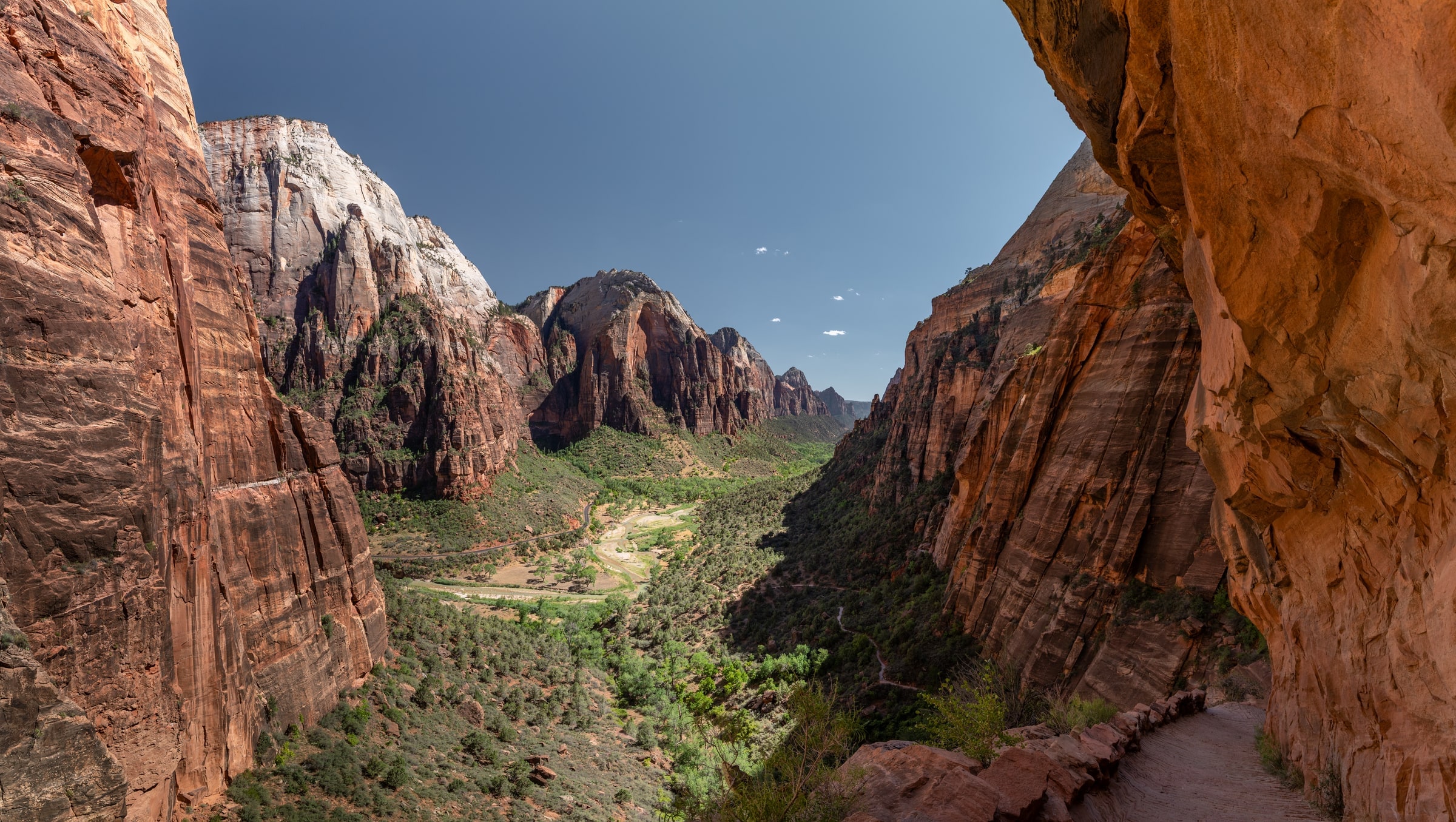
Zion's Incredible Landscapes
Once again, the landscape changed completely. At Zion, Bryce Canyon's hoodoos gave way to immense, very steep cliffs in shades of red, pink and sometimes white, creating quite a different impression from the rest of the trip. The park is also organized around a shuttle system: beyond a certain point, private vehicles are not allowed in the main canyon, and visitors must continue by shuttle.
The Famous Angels Landing Hike
We were lucky because we had obtained a permit for Angels Landing the day before arriving. It is one of the park's most sought-after hikes, with a lottery system controlling access to the final section. The walk is not very long, but it is steep, exposed in places and well equipped. We climbed to the viewpoint at the very top before descending to continue our day.
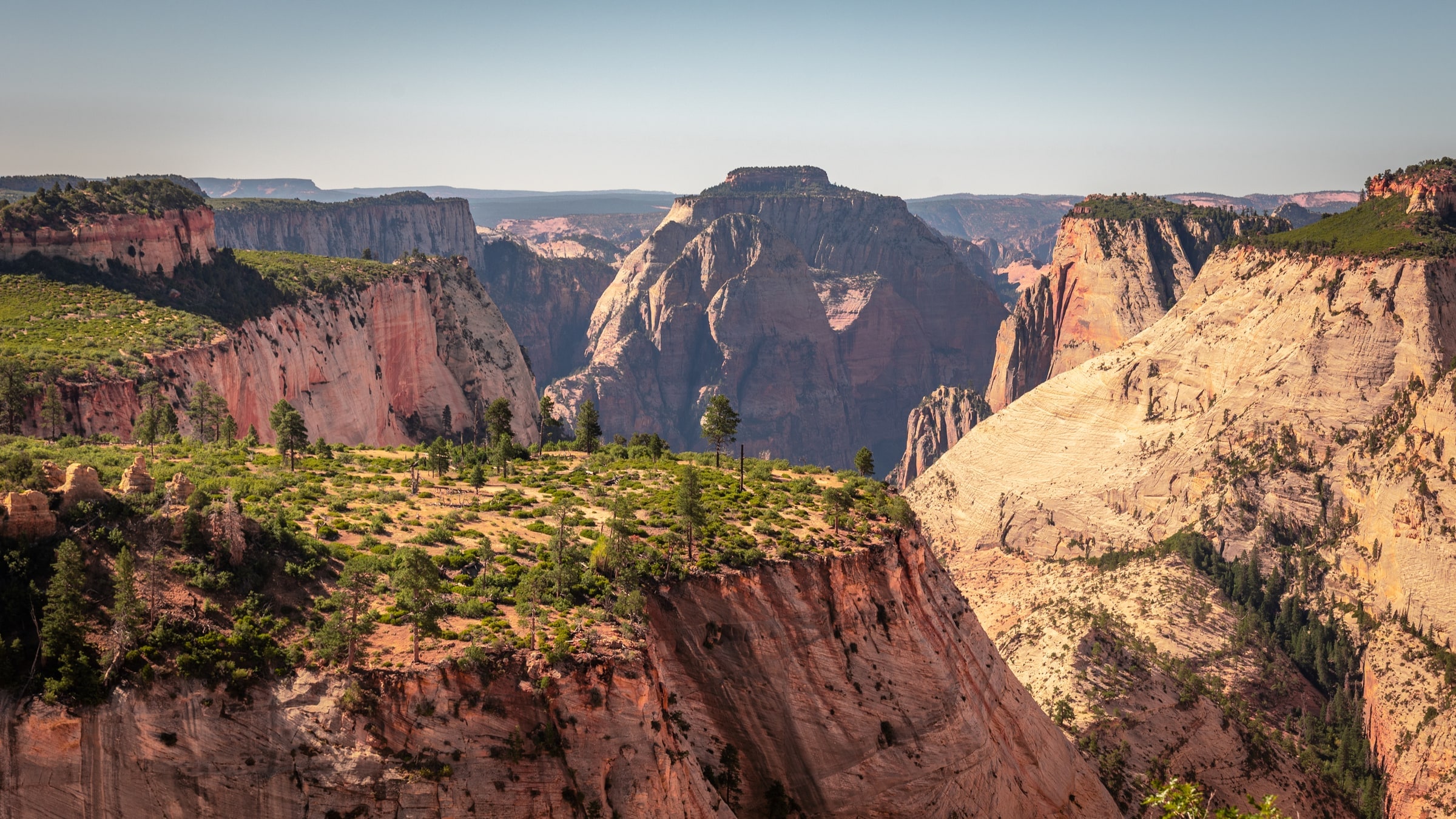
Backcountry Camping on the West Rim Trail
We had also obtained a wilderness permit to spend the night in the park at a campsite along the West Rim Trail. After Angels Landing, we therefore continued along part of this trail. We did not complete the full route or a loop, but this section already allowed us to discover a much quieter area. Many people stop at Angels Landing, but as soon as you continue farther along the West Rim Trail, there is almost no one left. The atmosphere becomes wilder and quieter, while the landscapes remain very impressive.
The Narrows
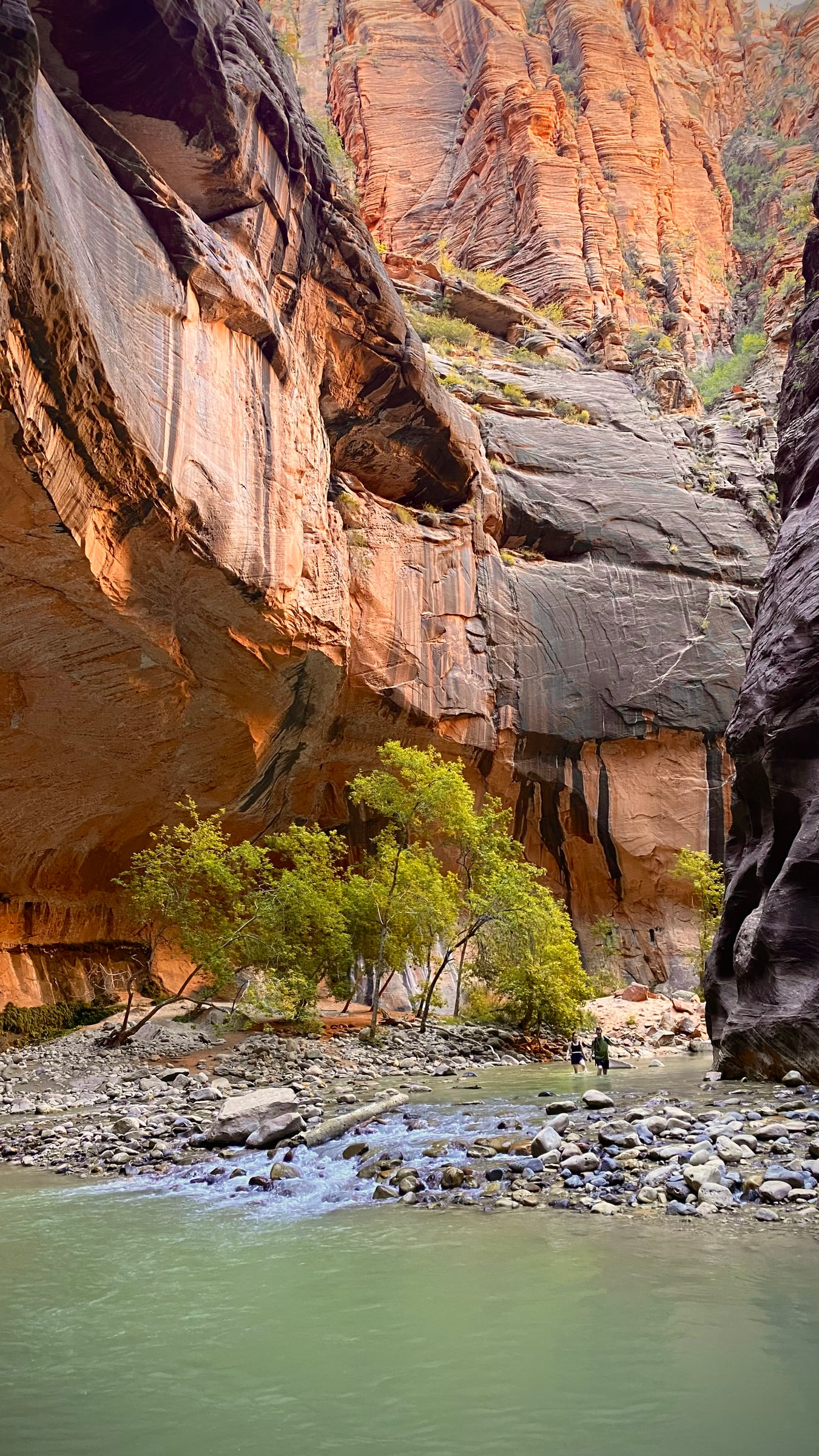
The following day, we returned along the same trail to the starting point, then took the shuttle to hike part of The Narrows. It is a rather unusual hike where you walk directly through the water at the bottom of the canyon, using a kind of pilgrim's staff. We did not have time to go very far, so we spent only two or three hours there. But even over a short section, the experience was very different from the rest of the trip.
We would have liked to do a longer version of The Narrows, or even camp along the river, but our schedule was too tight. After this final walk in Zion, we took the shuttle back, collected the car and left the park to begin the drive to Los Angeles. From Zion, around 700 kilometers remained to the California coast: almost a full day on the road, which truly marked the end of the national park part of the journey.
One Last Night in the Wild Beside the 4X4
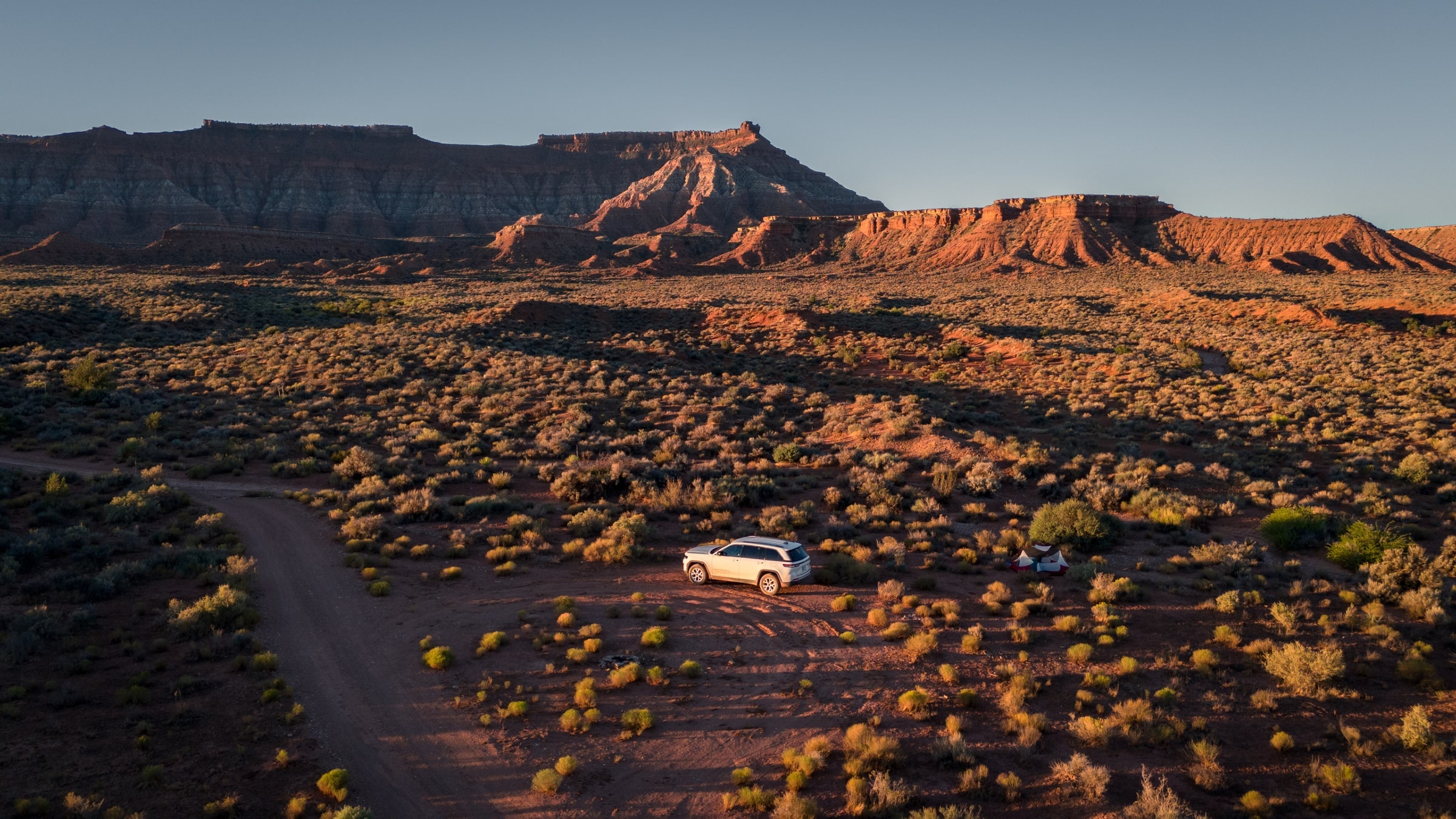
After Zion, we spent one final night camping in a desert landscape not far from Hurricane. We pitched the tent beside the 4x4, near large rock formations that still recalled the landscapes we had crossed over the previous few days. A very long drive to Los Angeles awaited us the next morning. We made only a brief stop in Las Vegas to take the classic photograph beside the Welcome to Fabulous Las Vegas sign. At around 40°C, the city was noisy and very busy, and it was not really what we were looking for on this trip, so we left again fairly quickly.
Our campsite for our final night in the Wild West
Crossing California and Arriving in Los Angeles!
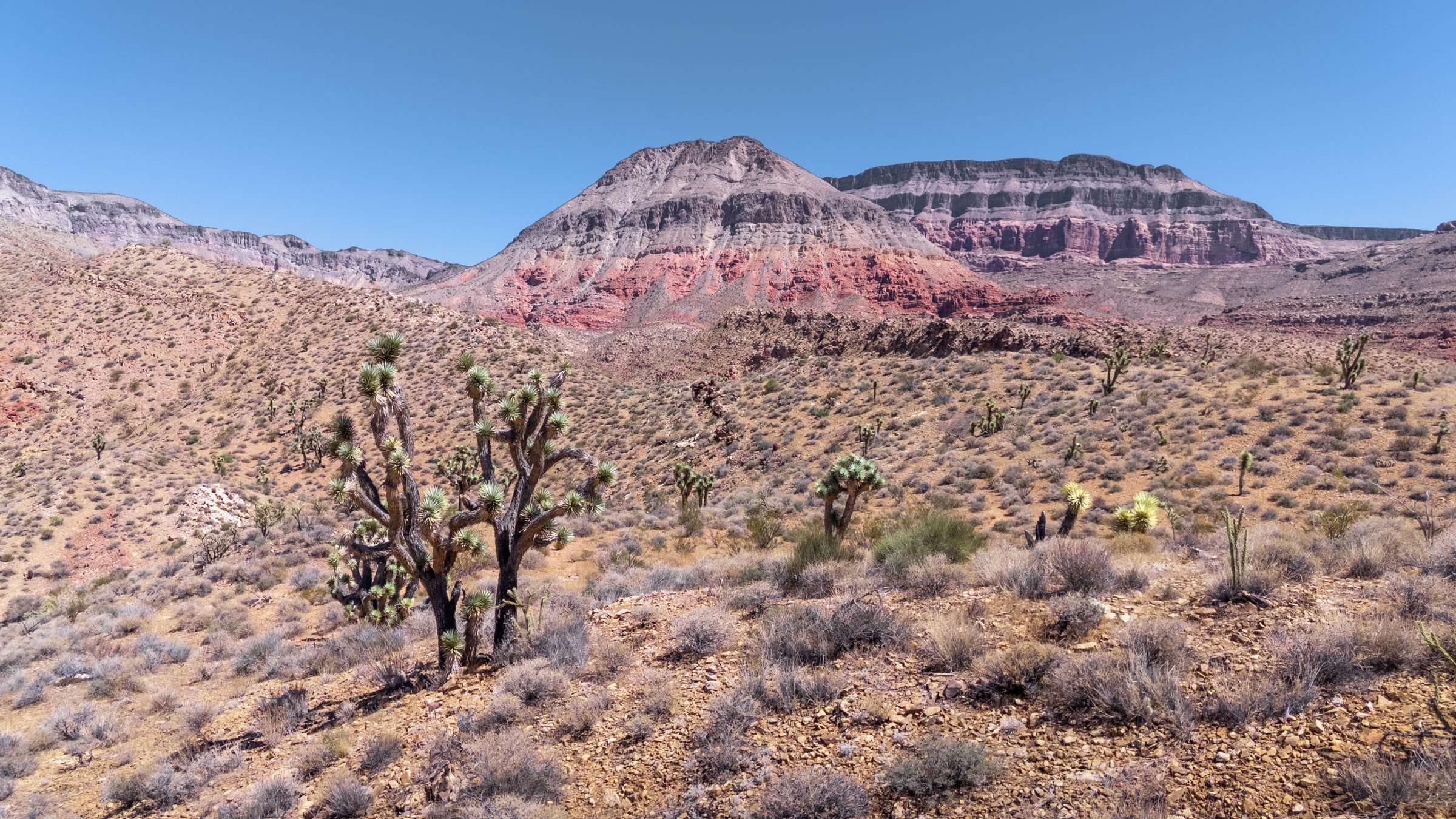
The rest of the drive ultimately made a stronger impression on us than Las Vegas. We crossed vast desert landscapes, with endless straight roads and a horizon that never seemed to get any closer. It is the kind of image we have all seen in films, but that you only really understand after spending hours driving through that immensity.
We had considered making a detour through Death Valley National Park, but our schedule was too tight. That will have to wait for another time. As we continued into California, the landscape changed again with the first Joshua trees, typical of the Mojave Desert. We also made a quick stop at Calico Ghost Town, a former mining village that has become very touristy and is a bit of a tourist trap, but is still nice to see along the way.
The day ended in Los Angeles, where we spent two days before returning to France. We quickly discovered Santa Monica, Malibu, Hollywood and Hollywood Boulevard without spending too long there: after two weeks in wide-open spaces, the city naturally appealed to us a little less. This was where our road trip ended, after crossing an immense part of the American West.
Julie Dzialoszynski.
Read other stories