
The Journey Begins!
This year, we set course for the Pyrenees for 9 days of adventure between France and Spain at the end of July 2020 with my trekking partner Sandy.
Although I often hiked in the Alps, I had never done a long trek in the Pyrenees, and the central part of the range particularly appealed to me. The itinerary we chose would make a first loop near the Vignemale massif, mainly in France, and a second one mostly in Spain, around Mont Perdu.
And because the adventure had to be complete, we set off carrying all our supplies and camping along the way!
We begin our first loop from the Pont d'Espagne. While the crowds are very (too?) present at the start, we soon find ourselves alone. Our journey can begin!
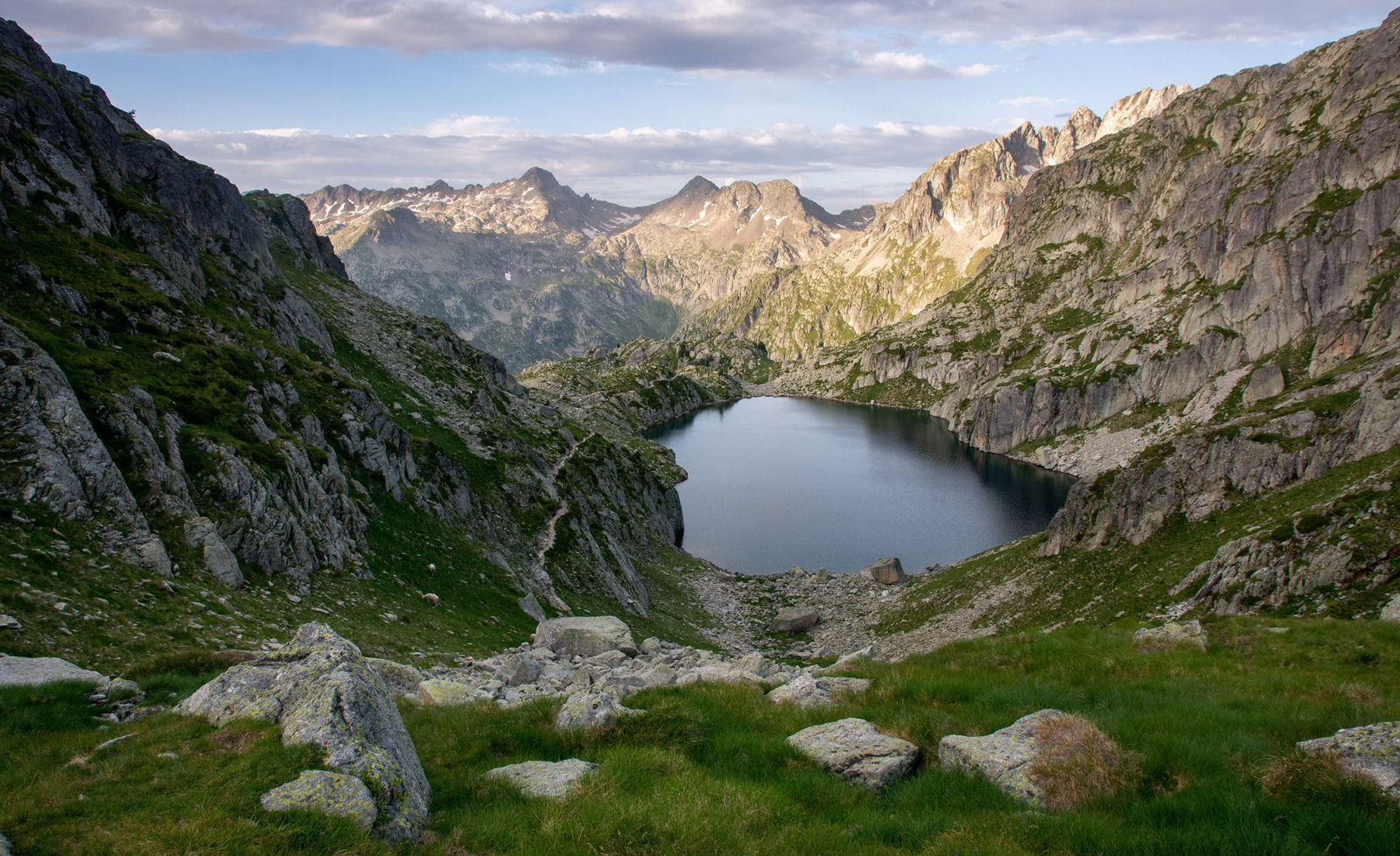
The bivouacs follow one another but are never the same. We discover different landscapes each day. As lake lovers, we're in for a treat! Lac de l'Embarrat, Lac du Pourtet, Lac Nère, Lac d'Arratille... The list is long and they're all more beautiful than the last! As a great enthusiast of mountain flora, I'm also delighted by the diversity of species we encounter. Some I already know, others endemic to the Pyrenees, it's magnificent!
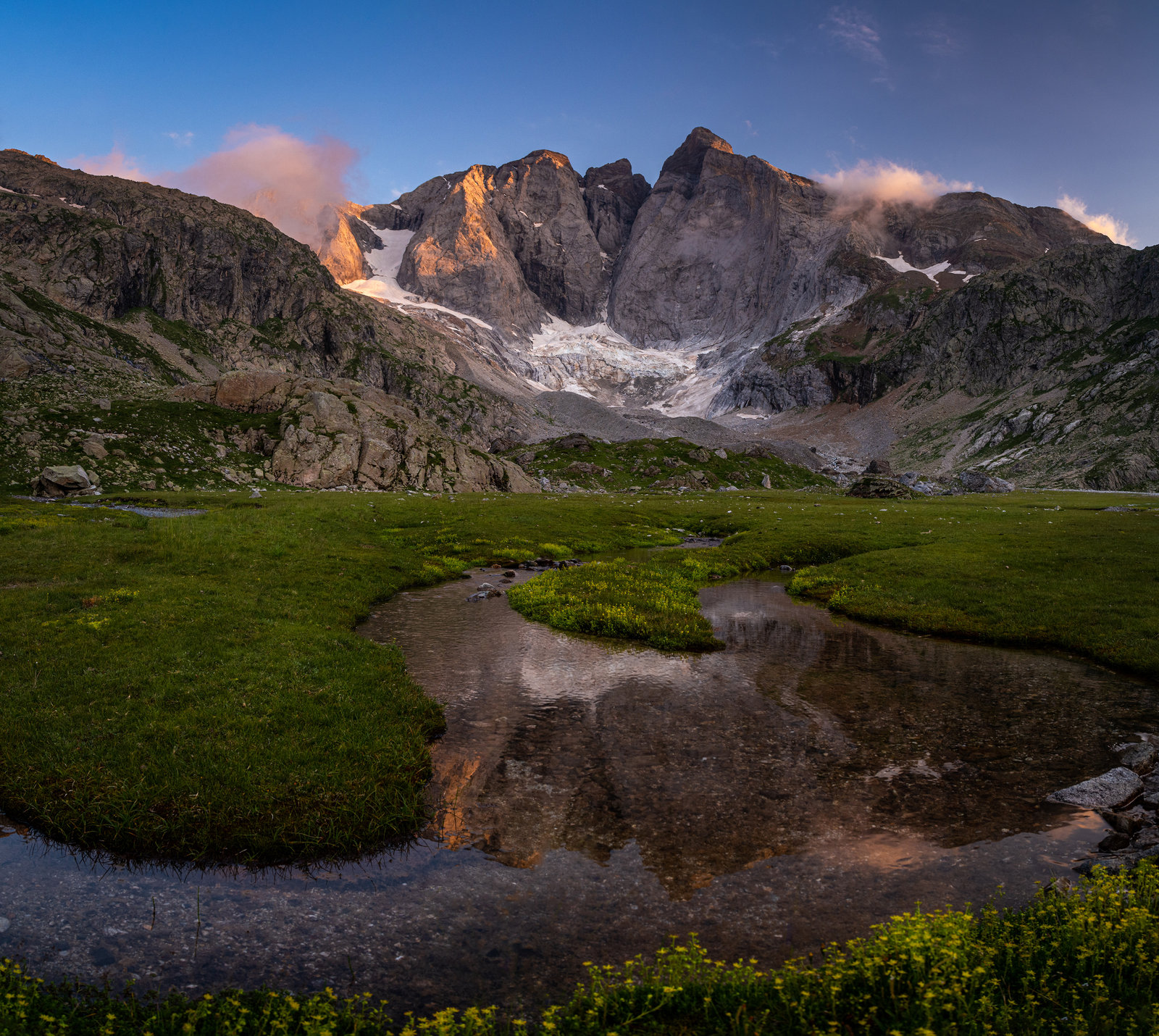
One of the most beautiful bivouacs of our trip was the one facing the Vignemale, an unmissable spot in the Pyrenees massif, and it's easy to understand why! One can only be fascinated by this imposing face and its glacier (sadly in a sorry state...). As a mountaineer, I couldn’t help wanting to climb it... So I promised myself to return one day as soon as the opportunity arises. To be continued!
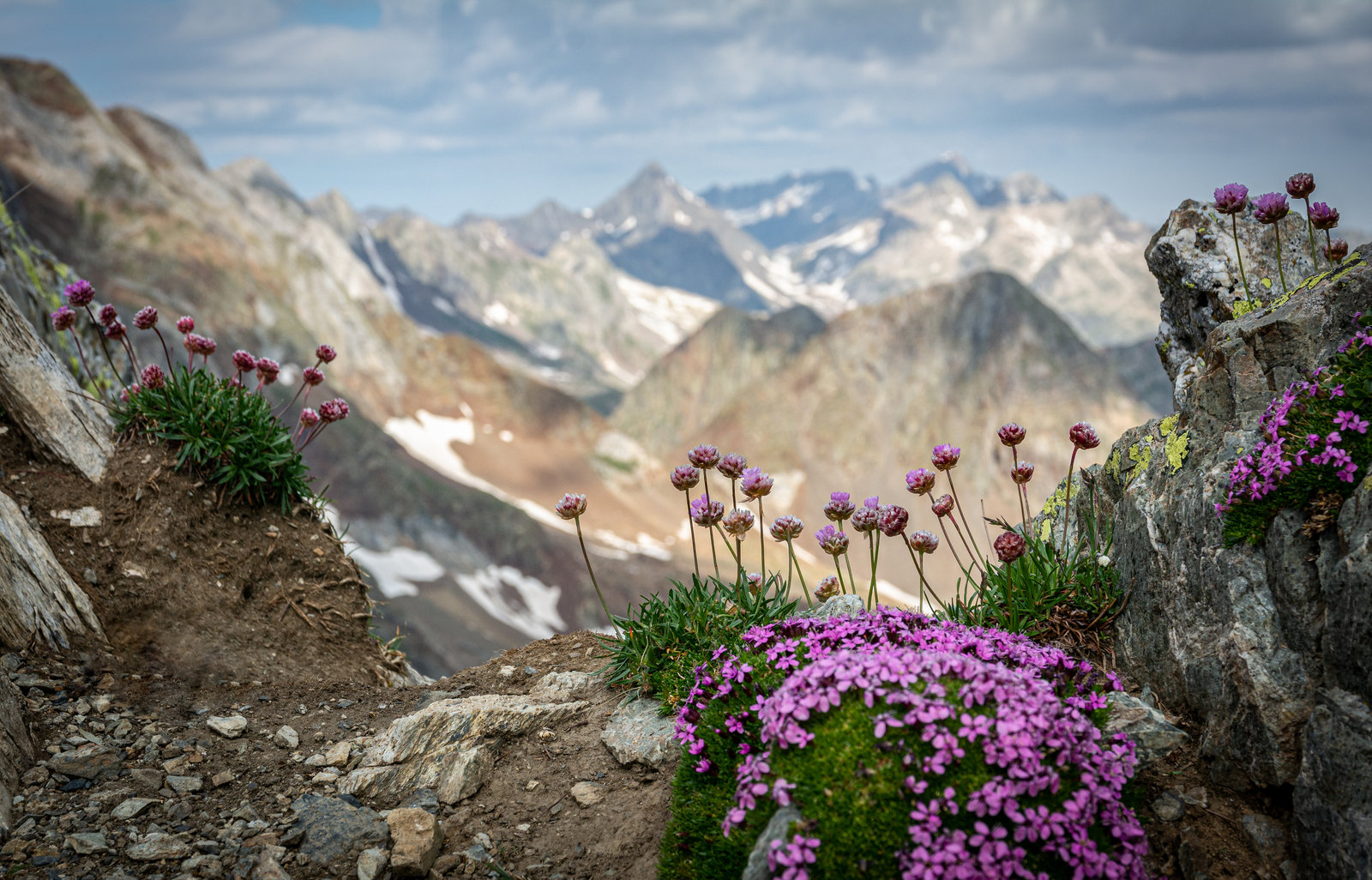
Our first loop ends after having the chance to contemplate the 360° view from the summit of the Petit Vignemale and a misty, atmospheric night near the Lac d'Estom.
Barely time for a life-saving pizza and a short hitchhike to the Col des Tentes, and we're off again for the second part of our trek.
The first 4 days hadn't really allowed us to discover the Spanish Pyrenees, but we'll make up for it with the next 5, which take place almost exclusively there!
On the agenda: rocky landscapes, high altitudes, canyons and summits!
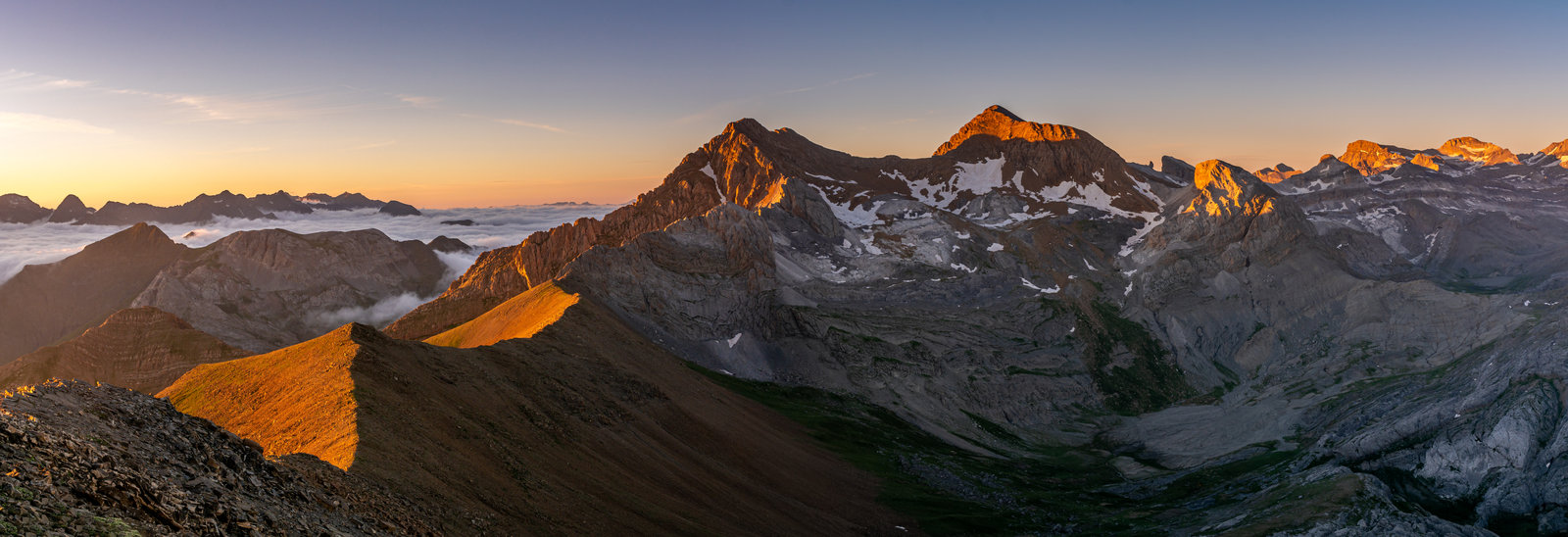
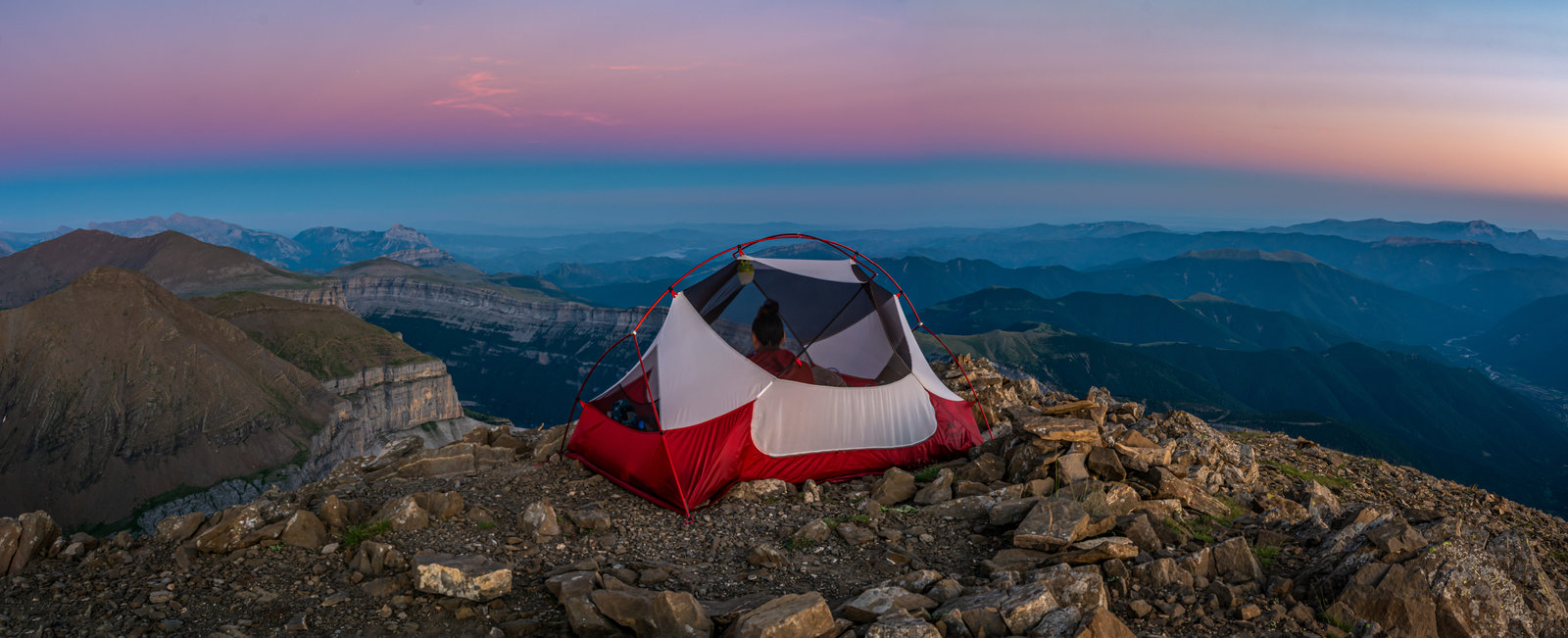
The first night spent on top of the Pico Mondarruego at the gates of the Ordesa canyon sets the tone: this second part of the trek will be wild, and that's not something we mind.
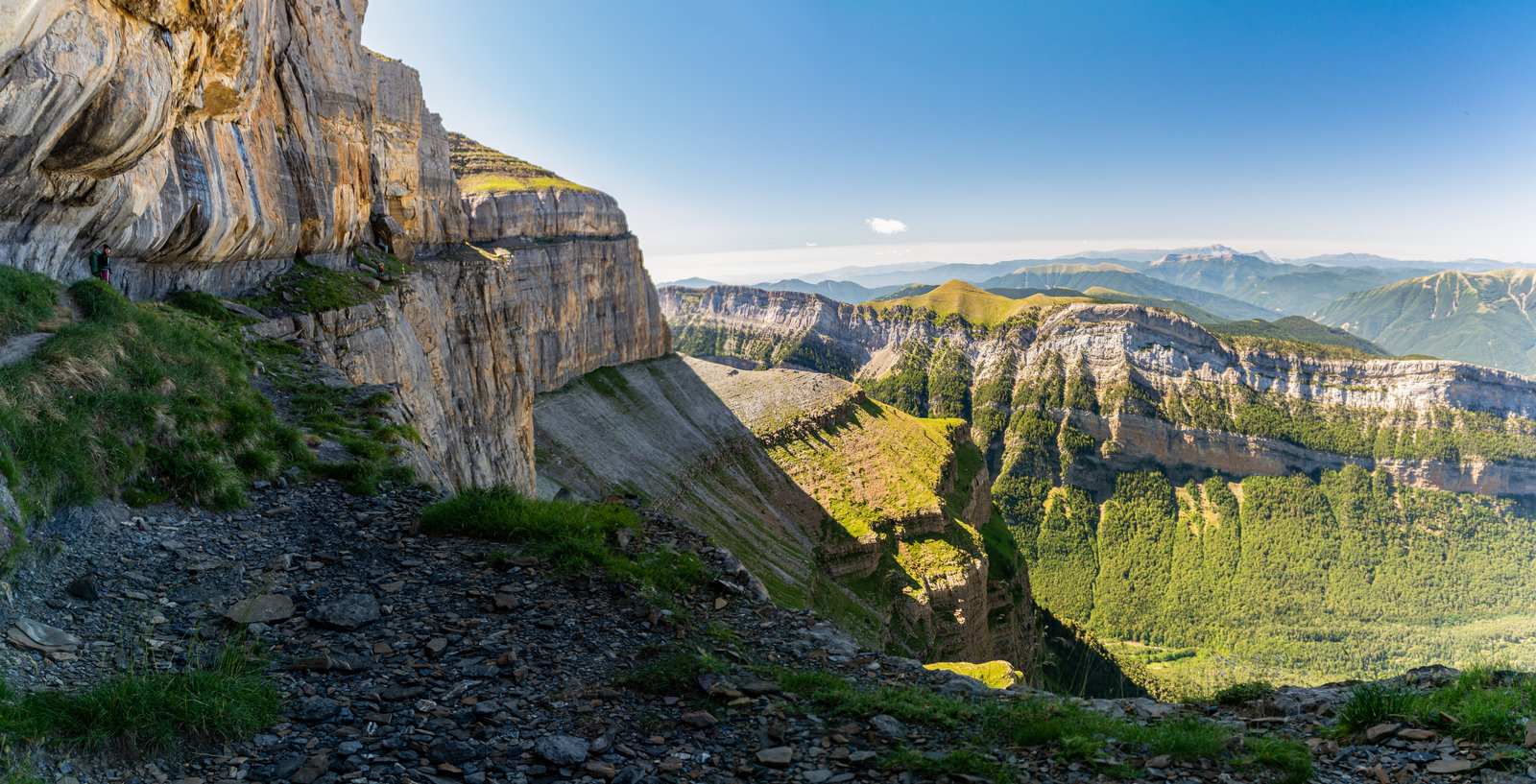
After a beautiful traverse of the Ordesa park and the famous, vertiginous Faja de las Flores, and a brief encounter with Pyrenean chamois, we enter the rocky heart of the Mont Perdu range (or Monte Perdido) for a magnificent bivouac at the summit of this lord of the mountains at 3,355m! The view from the top of Mont Perdu speaks for itself and makes the strenuous climb from Refuge de Góriz well worth the effort, even with the very steep scree at the end.
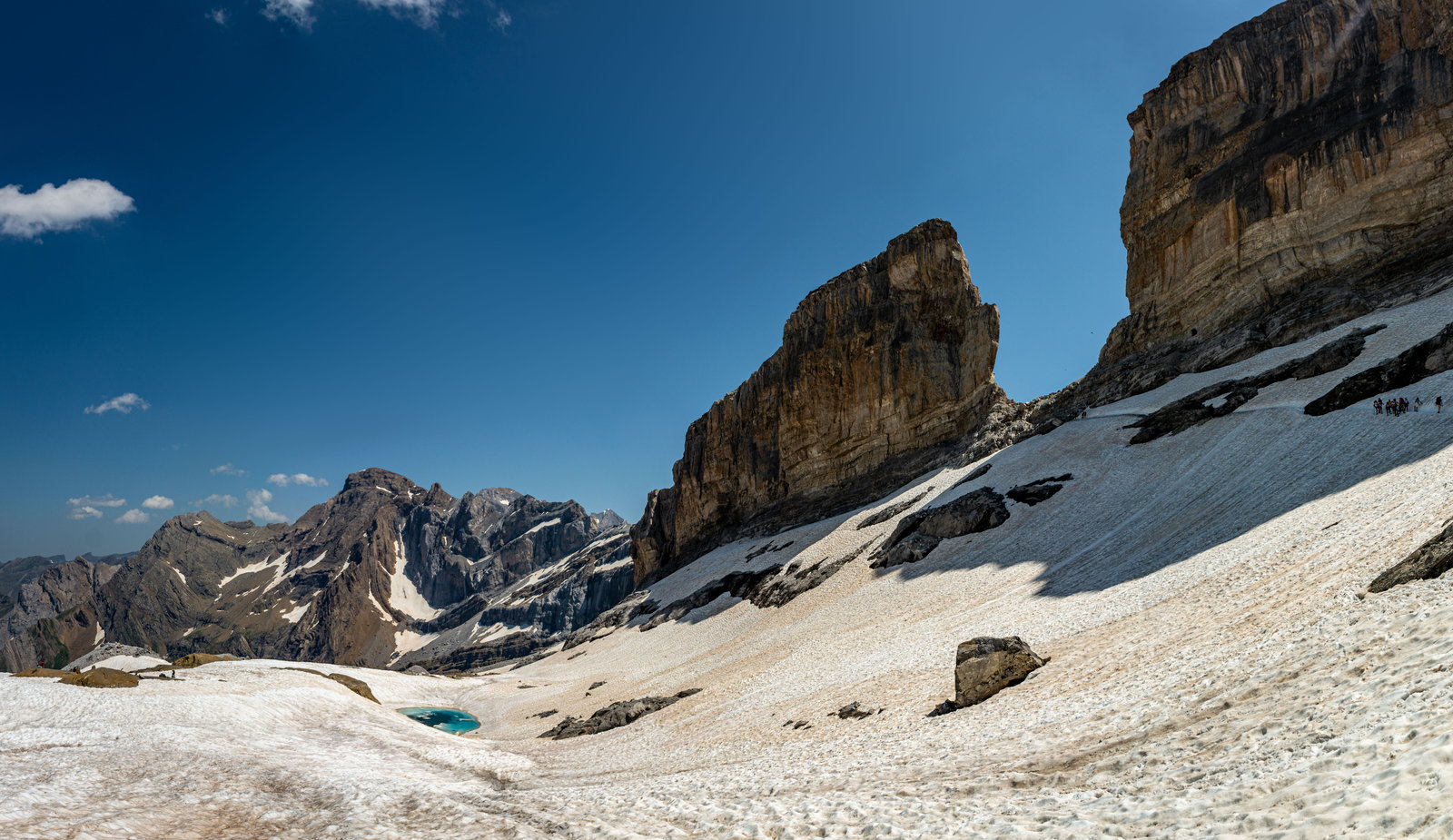
The rest of the itinerary takes place in France, with the crossing of the famous Brèche de Roland and the descent into the equally famous Cirque de Gavarnie, where we would endure a violent thunderstorm in the evening unlike anything I had ever experienced before.
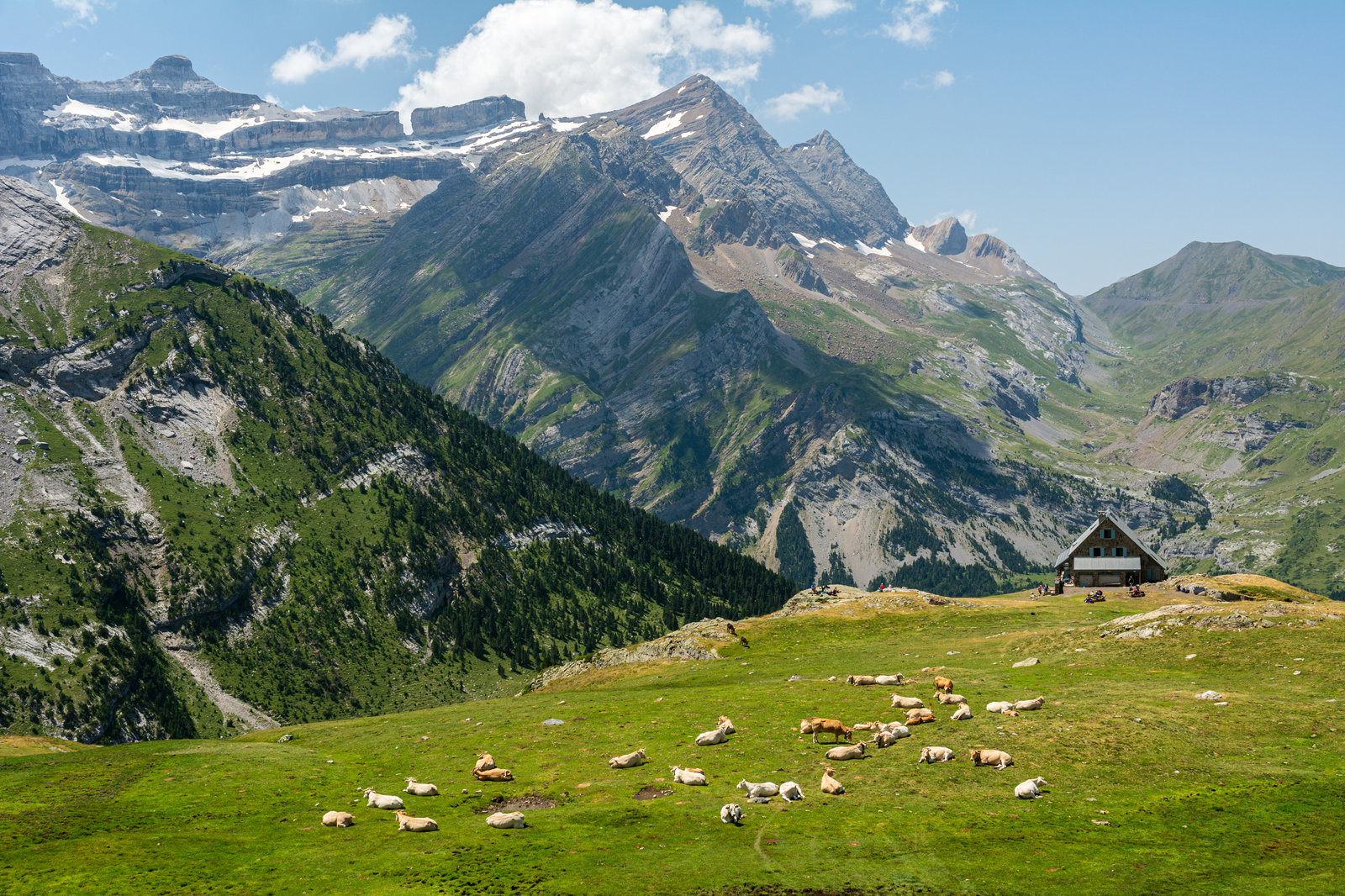
One last effort and we arrive at the Cirque d'Estaubé, above the sea of clouds in the company of cows, before descending the next day to the parking lot at Lac des Gloriettes for one last hitchhiking session before hitting the road!
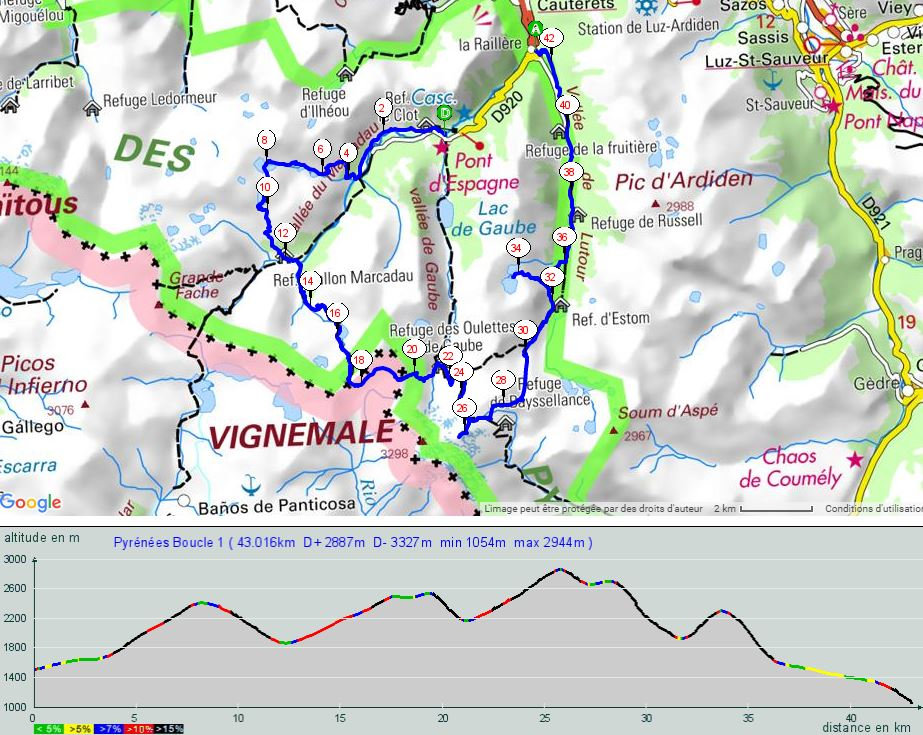
Below are the tracks of our two loops. The first totals 43km with 2,900m of elevation gain, and the second 55km with 3,400m of elevation gain. You can click on the route visuals below to access a page where you can view and download the GPX tracks. If you're considering doing one of these routes, note that the first is less technical overall, except for the passage through the Vallon de Labas, which includes a section in very unstable scree where snow patches can persist late in the season. This passage should be avoided unless you are sure-footed in mountain terrain.
The other loop is a bit more technical and often follows unmarked trails (for much of the section on the Spanish side). Sure footing and good navigation skills are recommended. Also note that water is scarce between the Col des Tentes and Refuge de Góriz.